
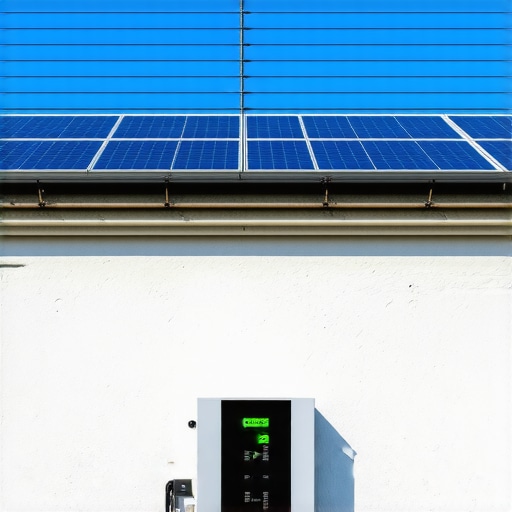
The Buzzing Inverter: Why Your Solar Dreams Might Be a Fire Hazard
You can smell a bad electrical installation before you see it. It is a sharp, ozone-heavy scent that pricks the back of your throat. When I walk into a garage and hear an inverter humming at a frequency that makes my teeth rattle, I know someone skipped the load calculation. Most homeowners think adding solar is like plugging in a new toaster. It is not. You are essentially building a miniature power plant on your roof and trying to force that energy into a grid that was designed when Eisenhower was in office. If your main disconnect services aren’t up to the task, that shiny new inverter is just a very expensive way to melt your service entrance conductors.
The Lesson of the Nicked Copper
My old journeyman, a man who smelled exclusively of pipe tobacco and electrical tape, used to smack my hand with a pair of dikes if he saw me stripping a wire with a pocket knife. ‘You nick that copper, kid, and you’ve just built a bottleneck,’ he’d scream. He was right. That tiny notch in the conductor creates a hot spot because of increased resistance. In a solar application, where you have constant high-current flow for eight hours a day, those hot spots become points of catastrophic failure. Whether you are doing a home backup generator install or a solar tie-in, the physics of resistance do not care about your timeline. We see it all the time in insurance claim electrical work: a small installation error that leads to a charred stud bay three years later.
Blueprint for the Grid-Tie: The Load Calculation Trap
Most 1970s-era homes were built with 100-amp or 125-amp panels. Back then, the biggest load was a clothes dryer and a color TV. Today, we are trying to cram in recessed lighting installation throughout the house, a smart thermostat wiring system, and now a 6kW solar array. When you backfeed a breaker, you are adding to the busbar’s total current capacity. If you haven’t performed a proper NEC 705.12 load calculation, you risk exceeding the busbar’s rating, which leads to ‘Cold Creep’ in the lugs. This is where the thermal expansion of the metal causes the screw to lose its torque over time, leading to arcing. This is why a circuit breaker replacement isn’t just about the breaker; it’s about the integrity of the entire panel bus.
“The sum of the ampere ratings of all overcurrent devices on subset panels shall not exceed the rating of the busbar.” – National Electrical Code (NEC) 705.12(B)(2)
The Grounding Electrode: Your Only Defense Against the Sky
I’ve seen solar arrays after a lightning strike where the inverter literally exploded off the wall. Why? Because the grounding electrode install was treated as an afterthought. You need a low-impedance path to the earth. In many older homes, the original ground is a single rod that’s corroded to the size of a pencil. When we perform a solar hookup, we often find that the existing grounding system is insufficient to handle the surge potential of a roof-mounted racking system. We aren’t just talking about a safety wire; we are talking about the physics of equipotential bonding. If your system isn’t bonded correctly, your up lighting services or your smart home tech will be the first things to fry during a grid transient.
Component Zooming: The Physics of the Main Disconnect
Let’s talk about the main disconnect services. This is the gatekeeper. When the grid goes down, your inverter must shut off immediately (anti-islanding) to prevent killing the lineman working on the poles outside. If your main disconnect is pitted or has high contact resistance, it can generate enough heat to deform the plastic housing. I’ve used my Wiggy to test across disconnects and found voltage drops that indicate a failing bridge. This is critical for ensuring safe and efficient EV charging station setup at home as well, as these high-draw devices put immense stress on the primary lugs. Don’t trust a 40-year-old disconnect with a modern solar load; replace it before it welds itself shut.
“Aluminum wire connections can overheat and cause a fire without tripping the circuit breaker.” – CPSC Safety Alert 516
The Forensic Checklist for a Grid-Ready System
- Verify Torque Settings: I don’t care how strong your wrists are; use a torque screwdriver. Every lug has a spec. If it’s too loose, it arcs. If it’s too tight, you deform the wire and cause a fracture.
- Check for Romex Nicks: If you are running a home run from the roof to the panel, inspect every inch. A single staple driven too hard can breach the jacket.
- The Tick Tracer Test: Before you close the panel, use your tick tracer to ensure no stray induction is happening in your temporary power services lines.
- Harmonic Distortion Check: Low-quality inverters produce ‘dirty’ power. This can hum through your smart thermostat wiring and cause ghost signals or hardware failure.
- Thermal Imaging: After the system has been under full load for an hour, I hit the breakers with a FLIR camera. If I see a 15-degree delta between phases, I know we have a resistance problem.
Conclusion: Sleep at Night Knowing It’s Torqued
Electricity is a lazy, dangerous beast that always takes the path of least resistance. If that path is through your wall studs because of a sloppy grounding electrode install, that’s on you. Whether you are dealing with ev charger troubleshooting or a complex solar grid-tie, the rules of the NEC are written in blood. Don’t let a ‘handyman special’ turn your home into a forensic investigation site. If you need a professional to look at your panel, contact us before you flip that main breaker. Your family’s safety is worth more than the cost of a proper torque wrench and a master electrician’s eye.