
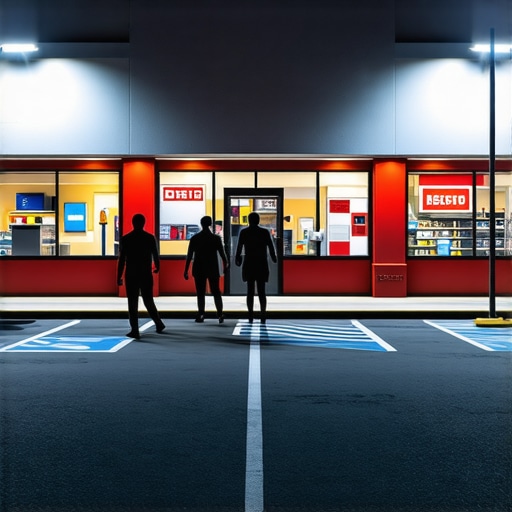
The Dark Truth About Your Store’s Exterior
I’ve spent thirty-five years pulling wire through places no human was meant to go, and if there’s one thing I can tell you about commercial real estate, it’s that customers are like moths. They gravitate toward the light and flee from the shadows. A dark parking lot isn’t just a sign of a lazy manager; it’s a forensic indicator of systemic electrical neglect. When a potential customer drives by your storefront at 7:00 PM on a Tuesday, they aren’t looking at your signage first. They are subconsciously scanning for safety. If your lot looks like a backdrop for a low-budget slasher flick, they aren’t pulling in. I’ve seen businesses go under because they treated their exterior lighting as an ‘optional’ expense rather than a fundamental revenue driver.
The Old Timer’s Lesson in Precision
My journeyman used to smack my hand if I stripped a wire with a knife. ‘You nick the copper, you create a hot spot,’ he’d scream. He was right. That tiny nick reduces the cross-sectional area of the conductor, increasing resistance and generating localized heat. In a parking lot lighting system, where you have massive electrical load calculations running through hundreds of feet of trenching electrical conduit, those ‘tiny nicks’ or loose connections lead to catastrophic failures. I once saw a pole base where the installer had been sloppy with his rough-in. The heat had slowly baked the insulation off the home run conductors until the whole circuit welded itself to the conduit. The lot stayed dark for a week while we had to jackhammer the asphalt. That’s a week of zero foot traffic after sunset.
“Aluminum wire connections can overheat and cause a fire without tripping the circuit breaker.” – CPSC Safety Alert 516
The Forensic Breakdown of a Dim Lot
When I perform a forensic inspection of a commercial property, the first thing I check is the voltage drop at the furthest pole. If your electrician didn’t understand the physics of resistance over distance, your LEDs are likely starving for current, causing them to flicker or dim prematurely. This isn’t just about ‘bright lights’; it’s about the psychology of illumination. A bright, crisp 5000K light temperature signals ‘open and safe.’ A yellowing, buzzing High-Pressure Sodium (HPS) lamp signals ‘old and neglected.’ We often see this in restaurant kitchen electrical setups too—poor lighting leads to accidents and filth. Outside, it leads to liability. If someone trips in your lot because a ballast reached its end-of-life and you didn’t have a maintenance contract, you’re not just losing foot traffic; you’re gaining a lawsuit.
The OSHA Factor and Liability
Let’s talk about OSHA compliance wiring. It’s not a suggestion. It’s a set of rules written in the blood of people who got hurt. This extends to your emergency exit lighting and the way your exterior paths are illuminated. If your parking lot lighting is tied into a photodetector that hasn’t been cleaned since the Clinton administration, your lights might not be coming on until it’s pitch black. That gap in coverage is when the ‘shady elements’ move in. I’ve seen office lighting upgrades that completely ignored the exterior, leaving employees to walk to their cars with a tick tracer and a prayer. That’s a failure of leadership and a failure of electrical design.
Physics of the Trench: Why Conduit Matters
When we do a shed wiring install or a massive commercial lot, the trenching electrical conduit is the most critical stage. If you use cheap PVC without the right schedule rating, or if you don’t use ‘monkey shit’ (duct seal) to keep the moisture out of the transitions, the earth’s freeze-thaw cycle will eventually crush your conductors. In coastal areas, the salt air is a literal conductor of ruin. It bridges the gap between phases in your meter cans and rots the copper from the inside out. I always recommend trenching electrical conduit deep enough to avoid the frost line and using heavy-wall galvanized steel where the pipe emerges from the dirt. You can learn more about lighting installations to see how we handle these high-stakes environments.
Modern Solutions: Beyond the Basics
In today’s market, you need more than just a few poles. You need permanent holiday lighting to keep the festive foot traffic coming, and you need robust phone line installation for your security gate systems. Everything is interconnected. If your smoke detector installation is out of date inside, chances are your exterior lighting is also suffering from ‘cold creep’—that fun phenomenon where thermal expansion and contraction causes screws to back out of terminals. This is why we carry a Wiggy to check for phantom voltage and ensure the ground is solid.
“The NEC requires that all outdoor electrical equipment be rated for the environment in which it is installed, specifically to prevent corrosion and ingress of moisture.” – NFPA 70: National Electrical Code
Load Calculations and the Future of Your Lot
You can’t just slap a dozen 400W equivalent LEDs on an old circuit and hope for the best. You need precise electrical load calculations. If you’re planning on adding EV stations, you need to understand the strain on your main lugs. Check out our guide on EV charging setup to understand the sheer volume of juice these systems pull. A parking lot that can support both bright lighting and vehicle charging is a lot that will see 200% more traffic than the dark lot across the street. Don’t be the owner who calls me after the fire department leaves. Be the owner who calls me because your breakers are torqued, your dikes are sharp, and your customers feel like they’re walking into a stadium when they park at your store. If you’re smelling ozone or seeing flickering, contact us before the ‘Time Bomb’ in your panel goes off. Professional office lighting upgrades and exterior overhauls pay for themselves in the first year through reduced insurance premiums and increased sales. Stop guessing and start grounding.