
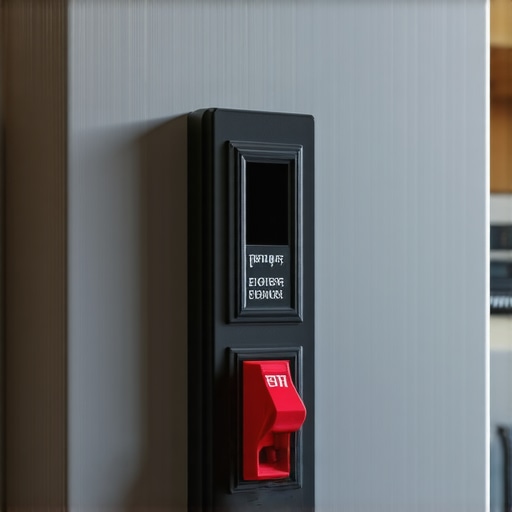
The Hum of a Dying System
Listen closely to your electrical panel when the AC kicks in. If you hear a low-frequency hum or a faint sizzle, that isn’t the sound of ‘work.’ That’s the sound of resistance. I’ve spent 35 years in the trade, and the most common lie I hear is that a 100-amp service is ‘plenty’ for a standard home. In 1974, when your biggest draw was a refrigerator and maybe a color TV, 100 amps was a kingdom. Today, with EV chargers, induction cooktops, and multi-zone HVAC systems, it’s a bottleneck that can literally melt the insulation off your Romex.
The Flipper Special: A Forensic Reality Check
I walked into a ‘fully renovated’ 1970s ranch last month where the flipper had buried three live junction boxes behind a designer marble backsplash. My tick tracer started screaming before I even touched the wall. When I finally cut into that expensive stone, I found a widow maker scenario: a 100-amp main lug that had been so overloaded it had turned a brittle, charcoal black. The homeowners were running a high-end espresso machine and a steam shower on a circuit that was already screaming for mercy. This is the reality of modern life on an obsolete service. You aren’t just ‘tripping breakers’; you are heat-cycling your home’s infrastructure to the point of failure.
“Aluminum wire connections can overheat and cause a fire without tripping the circuit breaker.” – CPSC Safety Alert 516
The Physics of the Bottleneck: Why 100 Amps Fails
To understand why you need an electrical panel upgrade, you have to understand the physics of Cold Creep and thermal expansion. In many mid-century homes, 100-amp panels were fitted with aluminum service entrance cables. Aluminum expands and contracts at a different rate than the brass or copper lugs holding it. Every time you turn on a heavy appliance, that wire heats up, expands, and then cools down. Over decades, this ‘creeps’ the wire out of the lug, creating a tiny air gap. That gap creates an arc, and that arc creates heat—upwards of 2,000 degrees Fahrenheit. This is why we use infrared thermography scans during our electrical inspections. We can see the heat signatures of a failing connection long before your nose picks up the scent of ozone.
When you add a modern demand like a Level 2 car charger, you are asking that 100-amp service to run at 80% capacity for hours on end. Most 100-amp breakers aren’t rated for continuous duty at that level. This leads to internal spring fatigue. Eventually, the breaker jams. It won’t trip even when the wire is melting. This is why ensuring safe and efficient EV charging station setup at home usually requires a heavy-up to 200 or 400 amps. It’s not an upsell; it’s a survival requirement for your home’s copper veins.
The Vulnerability of Underground Wiring Services
It’s not just what’s in the basement. Your underground wiring services are often the first point of failure. Old direct-burial cable from the 60s was never meant to handle the constant load of a 21st-century ‘smart home.’ Soil shifts, moisture enters micro-cracks in the insulation, and suddenly your meter base replacement becomes an emergency because the neutral wire has rotted away in the dirt. Without a solid neutral, you get ‘floating’ voltages that can fry your $4,000 OLED TV in a heartbeat. Integrating a structured wiring panel and CAT6 cabling services won’t mean a thing if the incoming power is fluctuating like a heartbeat monitor.
The Modern Solution: AI and Smart Infrastructure
We are moving into an era of AI fault detection where your panel can actually predict a failure before it happens. Modern smart lighting installation and battery backup wiring systems allow for load shedding—telling the house to turn off the water heater while the car is charging. But these systems require a solid foundation. If your meter base is rusted or your bus bars are pitted from years of arcing, no amount of ‘smart’ tech will save you. You need a clean rough-in and a professional trim-out with torqued connections.
“The service-entrance conductors shall have a capacity not less than the sum of the loads on the branch circuits served.” – National Electrical Code (NEC) Section 220.10
Why ‘Handyman’ Repairs are a Death Trap
I’ve seen it a thousand times: a homeowner hires a ‘guy’ who replaces a 15-amp breaker with a 20-amp breaker to stop it from tripping. That is a recipe for a structure fire. The breaker is there to protect the wire, not the appliance. If you have 14-gauge wire and a 20-amp breaker, the wire becomes the fuse. It will glow red-hot inside your walls, igniting the dust and 2x4s, and your breaker will never move. This is why electrical inspections are non-negotiable. We check for ‘monkey shit’ (duct seal) where it shouldn’t be and ensure your home run lines are properly sized. If you are experiencing flickering, it’s time to contact us before the smoke starts.
Upgrading your service isn’t just about being able to run the toaster and the microwave at the same time. It’s about providing a stable environment for your electronics and a safe environment for your family. From battery backup wiring to meter base replacement, every component must be sized for the reality of 2024, not 1974. Don’t wait for the ‘fishy smell’ of melting plastic. Get your infrared thermography scan today and see what your eyes are missing.