Why Your Shop’s Map Pack Ranking Drops the Moment You Cross City Lines
It is the ultimate frustration for modern contractors and local business owners. You are sitting in your office, pull out your phone, and search for your primary service. There you are: Rank #1 in the Google Map Pack. You feel like a king. You decide to grab lunch five miles away, across the city line, and you perform the same search. Suddenly, your business is nowhere to be found. You’ve vanished from the top three, replaced by competitors who, in your professional opinion, don’t have half the reputation or authority you do. This is the “Proximity Paradox,” and in the world of google business profile seo, it is the single biggest hurdle to scaling a service-based business.
As a Google Business Profile Product Expert, I see this daily. Business owners believe that if they are “the best,” they should rank everywhere. But Google’s algorithm doesn’t just care about who is the best; it cares about who is the closest. Google officially identifies Proximity, Relevance, and Prominence as the three pillars of local search. While you can influence relevance and prominence, proximity is often a “hard” filter. Understanding how to manipulate the other two to overcome the physical limitations of the third is the secret to local search visibility and sustained growth.
The Holy Trinity of Local SEO: Proximity, Relevance, and Prominence
To master google business profile optimization, you must first understand the weight Google assigns to its three core ranking factors. These aren’t just suggestions; they are the mathematical foundation of the local algorithm.
- Proximity: This is the distance between the searcher (or the searched-for location) and your business. It is the most volatile factor because it changes every time a user moves a block down the street.
- Relevance: How well a local business profile matches what someone is searching for. This is where your categories, services, and on-page SEO come into play.
- Prominence: How well-known a business is. This is calculated based on information Google has about a business from across the web (links, articles, directories) and your review count/score.
The problem most businesses face is that proximity often acts as a “tie-breaker” that carries too much weight. Even a perfectly executed google maps seo strategy can struggle to overcome a 10-mile distance gap if a competitor is literally next door to the searcher. However, proximity is not an absolute wall. When you increase your Prominence and Relevance significantly, you can “stretch” your ranking radius, allowing you to improve google maps rankings even in adjacent zip codes where you don’t have a physical footprint. This is the essence of local seo dominance: making your business so relevant and prominent that Google feels obligated to show you to the user, despite the distance.
Why Google’s “Distance Bias” is Getting Stronger in 2026
If you feel like your ranking radius has shrunk over the last few years, you aren’t imagining it. Since the “Vicinity” update and subsequent algorithmic shifts heading into 2026, Google has doubled down on user convenience. The algorithm assumes that if someone is searching for “emergency electrical repair” or “plumber near me,” they want someone who can arrive in minutes, not hours. This “Distance Bias” is a protective measure for the user experience, but it creates The Proximity Trap for high-quality shops that serve entire regions.
In 2026, the google maps algorithm is more sophisticated. It uses real-time traffic data and historical travel patterns to determine “functional proximity.” If your shop is 5 miles away but requires crossing a congested bridge, Google might rank a competitor who is 7 miles away but has a faster travel time. This is Why Your Google Maps Ranking Drops so precipitously when you cross certain geographic boundaries like highways or city limits. Google’s goal is to provide the path of least resistance for the consumer. To fight this, your gbp ranking campaign must focus on proving to Google that your “Prominence” outweighs the inconvenience of the extra three miles of travel.
The “Invisibility Cloak” Effect for Service Area Businesses (SABs)
For electricians, plumbers, and HVAC technicians – often categorized as Service Area Businesses (SABs) – the proximity struggle is even more pronounced. There is a common misconception in service area business seo that selecting a wide service area in your Google Business Profile settings will help you rank in those areas. This is a myth. The “Service Area” setting is purely cosmetic; it tells the user where you work, but it does virtually nothing to help your google business profile ranking in those distant zones.
Google still anchors your ranking to your verified address (even if that address is hidden). This creates an “invisibility cloak” where you are highly visible in a 2-mile radius around your home or office but invisible in the lucrative suburbs 15 miles away. To break through this, you need a specific Service Area Checklist that focuses on off-site signals. Since you don’t have a physical storefront in the target city, your website must work twice as hard to establish “Geographic Relevance” through city-specific landing pages and localized backlink profiles. Without these signals, you are just another gmb ranking service casualty, stuck in your own backyard while competitors take the high-ticket jobs in the neighboring city.
How to Audit Your Proximity Drop-Off
Most business owners suffer from “Owner’s Bias.” They check their rankings from their shop or their home and assume everything is fine. To truly dominate local search, you need to see what the customer sees. This requires a google maps audit that goes beyond a simple search.
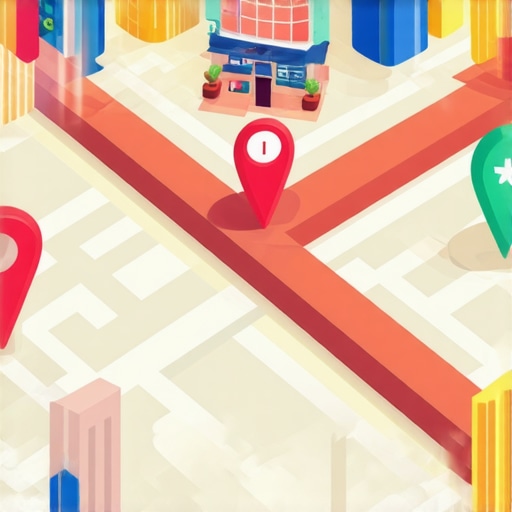
You need to see a grid-based visualization of your rankings. I recommend using a dedicated google maps rank tracker to visualize your visibility across a 10×10 mile grid. Using SEO Viper Tools, you can see exactly where your “green pins” (Rank 1-3) turn into “red pins” (Rank 10+). This data is invaluable because it tells you where the “drop-off” happens. Is there a specific neighborhood where you disappear? Is a specific competitor “blocking” you in the north? By using local seo automation tools, you can track these fluctuations over time and see if your optimization efforts are actually “stretching” your radius or if you are just spinning your wheels. This is the difference between guessing and implementing a data-driven maps seo campaign.
Strategies to Extend Your Ranking Radius
If you want to rank higher on google maps and stay there as you cross city lines, you have to feed the algorithm the signals it craves. Here are four actionable strategies to expand your reach:
- Hyperlocal Content: Stop writing generic “how-to” blogs. Write about specific neighborhood projects. Mention local landmarks, street names, and community events. This builds google business profile authority by proving you are active in that specific geographic area.
- Local Backlinks: A link from a national trade magazine is great for general SEO, but a link from a neighborhood Little League team or a local chamber of commerce is gold for local map pack seo. It anchors your relevance to a specific coordinate.
- Review Diversity: Google looks at the location of the people leaving you reviews. If 100% of your reviews come from people in your immediate zip code, Google won’t trust you to serve the next city over. Encourage your technicians to ask for reviews specifically when they are on jobs in your “expansion” zones. This is a critical part of a google maps ranking expert‘s playbook.
- Local Schema Markup: Use advanced local search engine optimization techniques like “Geographic Shape” schema in your website’s code. This tells Google’s crawlers exactly which coordinates you serve, providing a technical bridge between your website and your map listing.
Implementing these steps is how you win the ranking war against local electrical competitors. It’s not about one big move; it’s about a thousand small geographic signals that eventually convince the algorithm that you are the best choice for the user, regardless of the five-mile gap.
Common Mistakes That Shrink Your Map Pack Visibility
In my time as a google maps ranking expert, I’ve seen countless businesses accidentally sabotage their own reach. The most common mistake is NAP (Name, Address, Phone) inconsistency. If your address is listed differently on Yelp than it is on your GBP, Google loses confidence in your location, and your ranking radius shrinks as a result.
Another fatal error is trying to “game” the proximity filter by using P.O. Boxes, virtual offices, or UPS Stores as secondary locations. This might have worked in 2015, but in 2026, it is the fastest way to get a permanent suspension. Google’s AI can now easily cross-reference tax records and street-view imagery to verify physical locations. Instead of trying to trick the system, invest in legitimate local seo services that focus on building real prominence. A single, high-authority location will always out-earn five “ghost” locations that are constantly on the verge of being flagged. If you’re unsure where you stand, a professional google business profile audit can identify these red flags before they result in a loss of local seo traffic.
Conclusion: Dominating the Map Pack Beyond Your Doorstep
Proximity is a formidable opponent in google business profile seo, but it is not an invincible one. While Google will always have a natural bias toward the closest business, you can overcome that bias by becoming the most relevant and prominent option in your region. By understanding the “Proximity Paradox,” auditing your reach with local ranking software, and consistently building hyperlocal signals, you can ensure your shop doesn’t vanish the moment you cross city lines.
The goal isn’t just to rank; it’s to generate google business profile leads and increase phone calls from google maps. To do that, you need to be visible where your customers are, not just where your office is. Start by using SEO Viper Tools to identify your current “ranking borders,” and then use the strategies outlined above to push those borders further every single month. If you need a more hands-on approach, seeking out local ranking services can provide the technical edge needed to rank higher on google maps and stay there.