The Sound of a Shovel Meeting Death
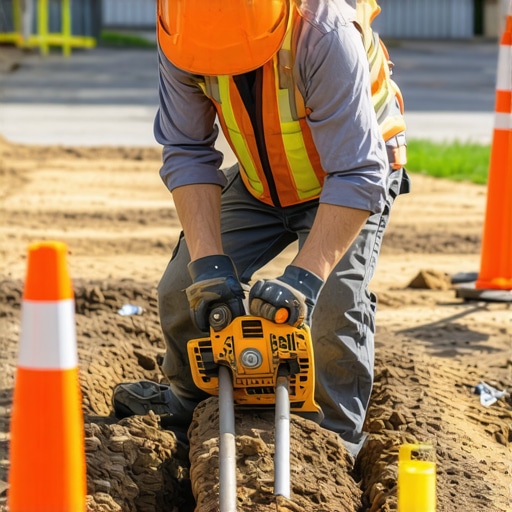
I still remember my journeyman, a grizzly guy named Miller who had three fingers on his left hand and a permanent squint from forty years of looking at arcs, grabbing my shoulder so hard it bruised. We were on a job site for a custom dock electrical services project, and I was about to sink a spade into the mud without checking the site plan. ‘You nick the copper, you create a hot spot,’ he’d scream. ‘You don’t just kill the power; you cook the ground around it.’ He was right. That lesson stayed with me through every rough-in and trim-out I’ve ever signed off on. If you’re planning on adding architectural lighting or deck lighting services to your yard in 2026, you aren’t just digging a hole; you’re managing a high-voltage environment that is constantly trying to return to the earth.
Rule 1: Burial Depth and the Physics of Soil Compression
The biggest mistake I see when conducting a forensic inspection of a failed system is a total disregard for burial depth. Most DIYers and cut-rate handymen think six inches of dirt is plenty. It’s not. When we talk about a 200 amp panel install or even a simple lighting installation services run, the NEC is very specific.
“Direct buried conductors and cables emerging from the ground shall be protected by enclosures or raceways extending from the minimum cover distance below grade to a point at least 8 feet above finished grade.” – NEC Section 300.5(D)(1)
For PVC Schedule 40 conduit, which is the standard for most residential yard work, you need 18 inches of cover. Why? Because of soil loading and thermal expansion. Dirt isn’t static. It moves. In coastal areas where I do a lot of dock work, the salt-heavy soil undergoes constant moisture cycles. This creates a ‘cold creep’ effect on your conduit. If you’re too shallow, the weight of a lawnmower or even heavy foot traffic compresses the soil, putting mechanical stress on the PVC joints. Eventually, those joints snap. Now you’ve got groundwater leaching into your conduit, creating a path for current to leak. This is where troubleshooting for lighting installations becomes a nightmare because the fault is buried under two tons of sod.
Rule 2: Material Integrity and the Coastal Corrosion Trap
If you’re working near the water, the rules of physics change. Salt air isn’t just a smell; it’s a conductive mist that eats metal for breakfast. When we install low voltage lighting or high-voltage feeds for a 200 amp panel, we have to account for galvanic reaction. If you use the wrong fasteners or fail to apply ‘monkey shit’ (that’s duct seal for the uninitiated) to the ends of your conduit, you’re inviting disaster. The salt bridges the gap between your hot and neutral phases inside the enclosure. I’ve seen meter cans rot from the inside out while the outside looked brand new. For 2026, we are seeing more requirements for AFCI breaker services even on outdoor circuits because they can detect the micro-arcing that happens when salt-air corrosion starts to compromise a wire’s insulation. If you’re performing a fuse box to breaker conversion, you better make sure your grounding electrode system is solid, or that salt air will turn your entire dock into a live conductor. This is why lighting installations in coastal zones require stainless steel or high-grade PVC, never EMT or thin-wall metal that will vanish in five years.
Rule 3: The ‘Home Run’ Protection and Harmonic Integrity
Every major trenching project usually involves a ‘home run’—that’s the main line going from the panel to the first junction point. If you’re installing a doorbell camera install or complex low voltage systems, you might think the power draw is too low to worry about. Wrong. Voltage drop over long yard runs is a real issue. If your wire gauge is too small, the resistance increases, generating heat. This is where I break out my Wiggy or a tick tracer to find where the voltage is sagging. For modern homes with high electronic loads, I often recommend harmonic filter services to deal with the electrical noise created by LED drivers and smart home tech. When you bury these lines, you must use a tracer wire or warning tape at least 12 inches above the conduit. I’ve seen too many ‘Widow Maker’ scenarios where a homeowner tries to install a fence post and hits a main line because there was no warning tape. If you’re doing an EV charging station setup at home, that trench is carrying a massive continuous load. The heat dissipation in buried conduit is lower than in open air, so if you undersize the wire or the pipe, you are literally baking the insulation until it turns brittle and fails.
“Aluminum wire connections can overheat and cause a fire without tripping the circuit breaker.” – CPSC Safety Alert 516
This applies to underground feeders too. If you’re using aluminum to save money on a long run to a shed or dock, every lug must be torqued to spec and treated with anti-oxidant paste to prevent the dreaded cold creep.
The Professional Verdict
Electricity isn’t a hobby, and the dirt doesn’t forgive mistakes. Whether you are looking at troubleshooting an EV charger that keeps tripping or you’re just trying to get some lights on your deck, the trench is the foundation of your safety. Don’t let a ‘handyman’ with a shovel and a roll of Romex (which should NEVER be buried, by the way) touch your yard. Use the right conduit, hit the right depth, and always, always seal your entries. If you need help getting it right the first time, contact us before you start digging. It’s a lot cheaper to do it right than to pay me to come out with a forensic tracer to find where your ‘renovated’ yard is leaking current into the grass.