The Autopsy of a Soaked Sanctuary
I’ve spent 35 years smelling failure. Usually, it’s the fishy stink of a melting Federal Pacific breaker or the ozone tang of a meter base replacement gone wrong. But today, it’s the cloying, earthy scent of black mold hiding behind a ‘fresh’ coat of paint. When a homeowner calls me about damp walls in 2026, they expect a simple fix. What they get is a forensic lesson in fluid dynamics and electrical resistance. Electricity isn’t a hobby, and moisture isn’t just a nuisance; it’s a slow-motion wrecking ball for your home’s infrastructure.
The Old Timer’s Lesson: The Nick That Burnt the House
My journeyman used to smack my hand if I stripped a wire with a knife. ‘You nick the copper, you create a hot spot,’ he’d scream. He was right. I recently opened a ceiling box for a ‘quiet’ fan that had simply stopped working. The homeowner was lucky. I found 14-gauge Romex where the insulation had literally vaporized. The installer—some handyman with a utility knife—had nicked the conductor during the rough-in. That microscopic notch reduced the cross-sectional area, increasing resistance. Under the continuous load of a high-efficiency motor trying to push air through a clogged vent, that notch turned into a heating element. This is why you hire a licensed master electrician, not a guy with a truck and a dream.
“Aluminum wire connections can overheat and cause a fire without tripping the circuit breaker.” – CPSC Safety Alert 516
Fix 1: The Physics of Static Pressure and Ducting Resistance
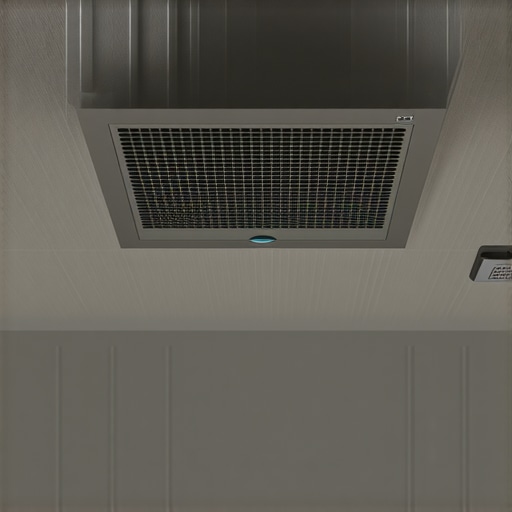
Most 2026 damp wall issues stem from ‘The Squeeze.’ People buy a fan rated for 110 CFM (Cubic Feet per Minute) and then attach it to a 3-inch corrugated flex duct that meanders through the attic like a lost tourist. In the trade, we call this a static pressure nightmare. When you increase resistance in the duct, the motor has to work harder, increasing the power factor correction needs of the circuit (though usually only seen at scale in industrial motor controls, the heat principle remains). If the air can’t move, the moisture stays. You need rigid 4-inch ducting, taped with foil—never duct tape—and a run that’s as short as a home run to the panel. We use monkey shit (duct seal) to ensure the envelope penetration is airtight, preventing the attic’s heat from meeting the bathroom’s cold air and creating a rainstorm inside your walls.
[IMAGE_PLACEHOLDER]
Fix 2: Salt Air Corrosion and the Coastal Connectivity Crisis
If you’re living near the water, your bathroom fan is a gateway for the enemy: salt air. I’ve seen dock electrical services where the stainless steel looks like Swiss cheese in five years. Inside a bathroom, that salt air bridges the gap between the hot and neutral terminals on your fan’s trim-out. This creates a high-resistance ground fault that doesn’t always trip a standard breaker but generates enough heat to blister paint. I’ve gone in with my Wiggy (solenoid tester) and found 40 volts of phantom potential on the metal housing of fans because of salt-crusted terminals. The fix? Dielectric grease on every connection and ensuring your trenching electrical conduit for exterior venting is properly pitched to drain away from the motor.
Fix 3: The Smart Lighting Integration and Sensor Overload
We’re seeing more smart lighting installation requests than ever, but people forget that these sensors often share a neutral with the fan. In 2026, the ‘Damp Wall’ fix is often an automation fix. If your fan isn’t on a delay timer, it isn’t doing its job. A human will turn off the light and fan the second they step out of the shower, leaving 90% of the humidity trapped. You need a humidity-sensing switch that operates independently of the light. When we handle lighting installations made easy, we always advocate for decoupled controls. If you’re troubleshooting for lighting installations and the fan is humming but not moving air, check the voltage at the switch with a Tick Tracer; cheap smart switches often leak current that can burn out sensitive fan motors over time.
“The total moisture load in a residential bathroom can exceed 2 pints of water per shower, requiring active ventilation for at least 20 minutes post-use.” – HVAC Industry Standard
Fix 4: Rectifying the Bootleg Ground and GFCI Failures
I’ve walked into bathrooms where the walls were literally weeping, and the culprit was a bootleg ground. Some ‘pro’ tied the neutral to the ground screw because they didn’t want to pull a new wire through the wall. This is a widow maker. In a high-moisture environment, that ground wire becomes a current-carrying conductor. Not only does this risk electrocution, but it also creates electromagnetic interference that can mess with your home’s smart lighting installation and even your level 2 EV charger communication if they share a sub-panel. Every bathroom fan must be GFCI protected if it’s over a tub or shower. If your GFCI is tripping, don’t just replace it; find the leak. Use your dikes to trim back any damp insulation and start fresh.
Fix 5: Panel Capacity and the Heavy-Up Reality
You can’t keep adding pathway lighting install projects, Christmas light services, and high-draw bathroom fans to a 100-amp Zinsco panel from 1974. If your fan is running slow, it might be a voltage drop issue because your main bus bars are charred. We often find that fixing a ‘damp wall’ requires a full meter base replacement and a panel upgrade. When the voltage drops, the amperage draws go up, the motor runs hot, and the CFM drops off a cliff. Before you spend $5,000 on mold remediation, spend the money to ensure your home’s heart—the panel—can actually handle the load. If you’re unsure, it’s time to contact us for a load calculation.
Final Torque: Why it Matters
At the end of the day, I want you to sleep at night knowing every screw in your junction box is torqued to spec. Moisture in 2026 isn’t just about mold; it’s about the integrity of your electrical system. From troubleshooting lighting to ensuring your fan isn’t a fire hazard, the details matter. Don’t let a damp wall be the warning sign you ignored until the smoke detectors started screaming.