The Forensic Autopsy of a Silent Glitch
You’re sitting in your custom theater, the lights dim, and the 8K master of some blockbuster begins. Then it happens. A two-second silence. A digital stutter that rips you out of the experience. Most people blame the software or the streaming box, but after 35 years of chasing phantoms through walls, I know better. It’s almost always the copper. Specifically, it’s the physics of high-frequency data meeting the reality of aging residential infrastructure. In 2026, the bandwidth requirements for uncompressed audio are so tight that a single loose lug in your service panel or an improperly grounded structured wiring panel can cause signal collapse. If your home was built between 1960 and 1980, you aren’t just fighting tech bugs; you’re fighting the ghost of Cold Creep and deteriorating aluminum conductors that are strangling your high-end gear.
The Flipper Special: A Forensic Case Study
I recently walked into a ‘fully renovated’ media room where the client was losing audio sync every time the HVAC kicked on. I pulled out my tick tracer and started scanning the backsplash of the adjacent wet bar. I found them: three buried junction boxes hidden behind the drywall by a flipper who thought ‘out of sight, out of mind’ applied to electrical safety. They had jumped the theater’s home run off a 15-amp lighting circuit. Every time the compressor drew an inrush current, the voltage sagged just enough to desync the HDMI handshake. I had to rip out the ‘handyman special’ wiring and run a dedicated circuit back to the panel to stop the bleeding. If you’re seeing dropouts, you might be living with a similar ticking time bomb.
“Aluminum wire connections can overheat and cause a fire without tripping the circuit breaker.” – CPSC Safety Alert 516
Fix 1: The Dedicated ‘Home Run’ and the End of Harmonic Noise
In 2026, sharing a circuit with a refrigerator or an EV charger installation is a death sentence for 8K audio. Modern switch-mode power supplies in chargers and appliances dump high-frequency noise—harmonics—back into the line. This noise manifests as ‘jitter’ in your audio processor. The fix is a dedicated 20-amp circuit using 12/2 Romex directly from the panel to your equipment rack. This isolates your gear from the electrical ‘trash’ of the rest of the house. If your panel is an old Federal Pacific or Zinsco, don’t even bother with the theater until you’ve performed a full panel changeout; those bus bars are notorious for arcing, which creates transient spikes that fry sensitive HDMI 2.1 chips.
Fix 2: Shielded Structured Wiring Panels and EMI Mitigation
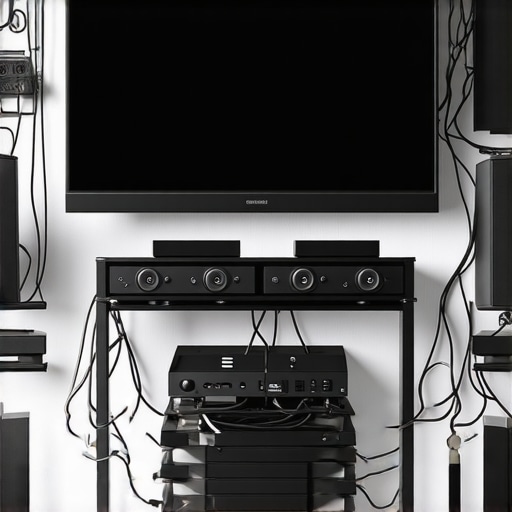
Most home theaters are a rat’s nest of cables behind the rack. When you bunch unshielded power cords with high-speed data lines, you get electromagnetic interference (EMI). Think of it like a crowded room where everyone is shouting. To stop 8K dropouts, you need to transition to structured wiring panels. These metal enclosures provide a localized ground plane and physical separation between high-voltage and low-voltage lines. Using Dikes to trim out excess cable and ensuring every shield is properly drained to a common ground is the only way to maintain the 48Gbps throughput required for modern audio formats. If you’re near the coast, those connections will oxidize faster than you think; use a dab of dielectric grease to prevent salt-air corrosion from creating a high-resistance bridge.
Fix 3: Ground Loop Elimination (The Wiggy Test)
If you hear a hum through your subwoofers or experience intermittent ‘blackouts’ on your screen, you likely have a ground loop. This happens when there is a difference in potential between two ground points. I’ve seen ‘pros’ try to solve this with a widow maker—a three-to-two prong adapter. That’s not a fix; it’s a fire hazard and a violation of everything I stand for. I use my Wiggy (solenoid voltmeter) to check for voltage between the neutral and ground. Often, the culprit is an old meter socket that has rotted out, causing the entire house to use the cable TV line as its primary ground path. A meter socket replacement and a fresh 10-foot copper ground rod are often the ‘secret’ fixes for a high-end theater.
“The grounding electrode conductor shall be installed in one continuous length without splice or joint.” – NEC Section 250.64(C)
Fix 4: Addressing Voltage Sag with a Heavy-Up
You can’t run a 2026 home on 1976 power. Between sauna heater installation, multiple EVs, and high-performance theater amps, your 100-amp service is likely screaming for mercy. When the voltage drops below 108V, digital components start to behave erratically. This is where three phase power services (in commercial settings) or a residential ‘heavy-up’ to 200 or 400 amps becomes mandatory. If your lights flicker when the theater is cranked, you are starving your equipment of the current it needs to process those massive 8K data packets. Ensure your insurance claim electrical work after a storm includes an upgrade to a modern, bolt-on bus bar panel to ensure the tightest possible connection.
Fix 5: Proper Torque and Thermal Expansion
Electricity is heat. Every time you turn your system on, the wires expand. When you turn it off, they contract. This is the physics of thermal cycling. Over a decade, screws loosen. A loose wire is a high-resistance heater. I’ve seen terminal blocks in bollard light installations and theater racks alike that have literally melted because they weren’t torqued to spec. Go into your panel (or hire a pro) and ensure every breaker lug and neutral bar screw is torqued. Don’t just ‘snug it up’—use a torque screwdriver. If you find discolored copper, it’s already been compromised by heat. Cut it back to fresh metal and re-terminate. This is especially critical if you have standby generator install transfer switches, as the vibration from the generator can accelerate mechanical loosening.
Sleep at Night Knowing It’s Torqued
High-end AV isn’t a hobby anymore; it’s a sophisticated load on your home’s electrical heart. If you’re experiencing 8K audio dropouts, stop looking at the settings menu and start looking at your structured wiring panels and your service entrance. Electricity is a visceral, dangerous force that requires respect. Whether you need storm damage electrical repair or a proactive EV charger installation, don’t let a handyman touch your home’s infrastructure. Contact a pro who knows the difference between a ‘good enough’ connection and a code-compliant one. Visit our contact page to secure your home’s future. For more on high-tech electrical needs, see our guide on ensuring safe EV charging or learn about lighting troubleshooting. Be safe, keep your wires tight, and keep the ‘monkey shit’ (duct seal) where it belongs—sealing the conduit, not hiding bad work.