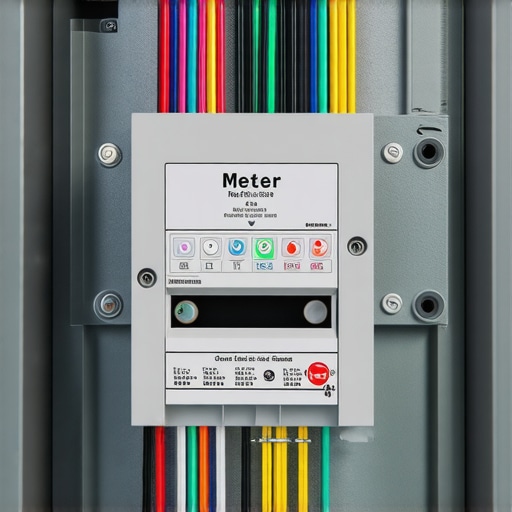
The Invisible Load: Why Your Smart Home is Killing Your Service Entrance
If you think your smart home setup is just about fancy light switches and a doorbell camera, you are dead wrong. By 2026, the average ‘connected’ residence is pulling more juice than a 1970s machine shop. We are talking about 80-amp EV chargers, massive battery backup wiring systems, and permanent holiday lighting that stays up year-round. All that current has to pass through one single point of failure: the meter base. I have spent 35 years pulling meters and I can tell you, the physics of electricity do not care about your Wi-Fi speed. When you double the load on a 40-year-old meter socket, you are playing a high-stakes game of thermal roulette. Most homeowners think as long as the lights stay on, everything is fine. But I have seen what happens when the hidden components inside that gray box start to cook.
The Old Timer’s Lesson: Why Nicks Lead to Fires
My journeyman used to smack my hand if I stripped a wire with a knife. ‘You nick the copper, you create a hot spot,’ he would scream. He was right. That lesson applies tenfold to your service entrance. In the old days, we ran a few lights and a refrigerator. Today, your home automation setup is constantly cycling loads, creating micro-vibrations in the lugs. If those connections were not torqued to spec with a calibrated wrench, or if the wire was slightly damaged during the rough-in phase, you are looking at a localized heater. I once spent four hours on a forensic job where a ‘smart home’ caught fire because the installer used a tick tracer instead of a real Wiggy to check for voltage and missed a floating neutral that was slowly melting the meter jaw. Electricity is not a hobby; it is a force of nature that wants to find the path of least resistance, even if that path is through your siding.
“Aluminum wire connections can overheat and cause a fire without tripping the circuit breaker.” – CPSC Safety Alert 516
Sign 1: The ‘Ghost in the Machine’ (Voltage Sag and Harmonic Distortion)
The first sign your meter base is failing isn’t a fire; it is your smart devices acting possessed. If your smart bulbs flicker when the AC kicks on, or if your access control wiring keeps rebooting for no reason, you likely have high resistance at the meter. This is often caused by ‘Cold Creep’ in older aluminum conductors. Aluminum expands and contracts at a different rate than the brass lugs in the meter base. Over decades, this cycle literally squeezes the wire out of the lug, creating a loose connection. This is why thermal imaging inspections are no longer optional for high-load homes. We use FLIR cameras to look for ‘the glow’—the heat signature of a failing lug. If we see a 50-degree temperature delta between phases at the meter, that base is a ticking time bomb. High resistance creates a voltage drop, and when voltage drops, amperage must increase to maintain the same power output. This extra heat further degrades the insulation until it finally arcs. You can read more about how we diagnose these issues in our guide on lighting installations troubleshooting.
Sign 2: The Smell of Ozone and the ‘Fried Fish’ Scent
If you walk past your meter and smell something like burnt plastic or fried fish, do not call a plumber—call an electrician. That smell is the phenolic resin in the meter block carbonizing. Once a meter jaw loses its spring tension—usually from years of carrying 100+ amps of retail store wiring grade loads—it begins to arc. Every time it arcs, it creates a microscopic layer of oxidation. This oxide layer is an insulator, which creates more resistance, which creates more heat. It is a death spiral for your electrical system. In many cases, I have pulled a meter only to find the plastic housing has turned into a brittle, charred mess that crumbles in my hands. This is why arc flash studies are becoming standard for larger residential estates. If the meter base cannot handle the fault current, it could literally explode in your face. For those looking to avoid this, ensuring your EV charging station setup includes a proper service load calculation is non-negotiable.
“Service-entrance conductors shall have a capacity not less than the maximum load to be served.” – NEC Article 230.42
Sign 3: Visible Corrosion and ‘Monkey Shit’ Failure
Open your eyes and look at the enclosure. If you see streaks of rust running down the service mast or green crust on the lugs, your battery backup wiring is at risk. This is especially common in homes that didn’t have monkey shit (duct seal) properly applied to the top of the conduit during the trim-out. Water follows the home run cables right into the meter base, causing galvanic corrosion. When different metals like copper and aluminum meet in the presence of moisture, they trade electrons and turn into a white, powdery mess. This powder increases resistance and can eventually weld the meter to the socket. If your home has permanent holiday lighting drawing constant current through corroded lugs, the heat buildup will be massive. You might need power factor correction to handle the inductive loads of modern smart appliances, but none of that matters if the physical infrastructure is rotting from the inside out.
The Fix: Heavy-Ups and Forensic Repairs
Replacing a meter base is not a DIY job. It involves pulling the utility seal (the ‘widow maker’ for the untrained) and working with live, unfused power from the transformer. We don’t just swap the box; we perform a full service ‘Heavy-Up.’ This includes office lighting upgrades logic where we ensure the entire path—from the utility tap to the main breaker—is sized for 2026 power demands. We use dikes to clean up the old wiring and ensure every lug is coated with De-Ox and torqued to the specific inch-pounds required by the manufacturer. If you are adding a bathroom exhaust fan or a whole-home automation system, do not neglect the foundation of your power. For more tips on maintaining your high-demand systems, check out our EV charger maintenance guide. Electricity demands respect. If you don’t give it a clean, tight path to follow, it will find its own way out, and you won’t like the results. Sleep at night knowing your lugs are torqued, not toasted. Contact us today if you suspect your meter is failing.