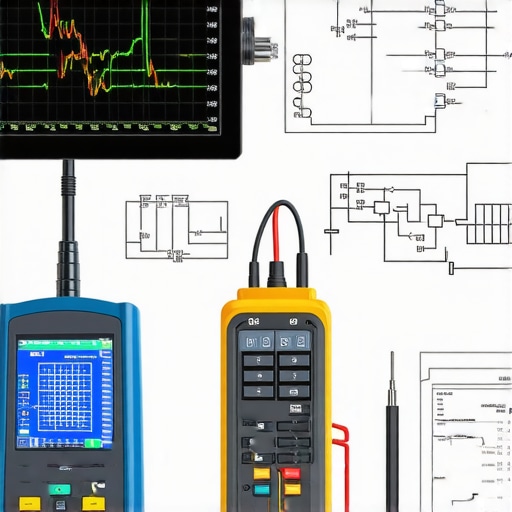
The Smell of a Short: A Sensory Warning from the Front Lines
You never forget the smell of a localized ozone event. It’s that sharp, metallic tang in the air that signals your expensive smart home equipment is currently undergoing a slow-motion execution. I’ve spent thirty-five years chasing that ghost through crawlspaces and behind drywall. My old journeyman used to smack my hand if I stripped a wire with a knife. ‘You nick the copper, you create a hot spot,’ he’d scream. He was right. That microscopic notch reduces the cross-sectional area of the conductor, increasing resistance. In the world of physics, resistance plus current equals heat. Do that on a home run for your server rack, and you aren’t just looking at a tripped breaker; you’re looking at a structural fire waiting for its debut. By the time most homeowners call me for a 100 amp service upgrade, the damage is already visible as charred insulation on the bus bar. We are entering 2026, where your refrigerator has more computing power than the Apollo 11 lunar module, yet you’re still running it on a service designed for a few light bulbs and a toaster. It’s time for a forensic look at why your tech is dying and how a professional power quality analysis stops the carnage.
The Forensic Breakdown: Why Your High-End Electronics are Frying
Most people think electricity is like water in a pipe—it’s either on or off. But to a forensic inspector, electricity is a turbulent, messy force. We look at ‘dirty power,’ which includes transients, harmonics, and voltage sags. When you install an electric gate opener or a heavy-duty swimming pool bonding system, you’re changing the load profile of your entire property. If those systems aren’t balanced, you get harmonic distortion that heats up the neutral wire. Unlike the hot wires, the neutral doesn’t have a breaker to protect it from overcurrent caused by these harmonics.
“Aluminum wire connections can overheat and cause a fire without tripping the circuit breaker.” – CPSC Safety Alert 516
This is especially true in mid-century homes where the 100 amp service upgrade is forty years overdue. When the electrical system can’t handle the ‘inrush current’ of a standby generator install or a large HVAC unit, the voltage drops. Your electronics try to compensate by drawing more current to maintain the same power level. This creates internal heat in the microchips, slowly cooking your motherboard until it bricks. If you’ve been seeing your lights flicker when the fridge kicks on, your tech is already in the danger zone.
Win #1: Infrared Thermography Scans—Seeing the Invisible Threat
The first win for 2026 is the widespread adoption of infrared thermography scans. This isn’t just a fancy camera; it’s a forensic tool that identifies high-resistance connections before they become an arc-fault. Resistance is the enemy. When a screw on a breaker lug loosens due to ‘thermal cycling’—the expansion and contraction of the metal as it heats and cools—it creates a tiny air gap. Electricity will jump that gap, creating a micro-arc that reaches thousands of degrees. Using a thermal imager, I can see a ‘hot’ breaker glowing like a beacon against the cool background of the panel. This is often the precursor to a total system failure. If we catch it during a routine check, we can torque those lugs to the manufacturer’s inch-pound specifications. Most handymen just ‘crank it till it’s tight,’ which actually crushes the wire and makes the problem worse. If you are planning lighting installations, a thermal scan of your existing panel is the only way to ensure you aren’t adding fuel to a literal fire.
Win #2: Grounding, Bonding, and the Storm Damage Shield
The second win involves a fundamental misunderstanding of grounding. I’ve been on enough storm damage electrical repair calls to know that a poor ground is the number one reason whole-house surge protectors fail. In 2026, we are seeing more volatile weather patterns, and your house needs a robust path to earth. This isn’t just about a single copper rod shoved in the dirt. It’s about swimming pool bonding and ensuring your electric gate opener isn’t acting as a giant lightning rod for your main panel.
“The grounding electrode conductor shall be installed in one continuous length without a splice or joint.” – NEC Article 250.64(C)
When I do a forensic inspection, I’m looking for ‘bootleg grounds’ and corroded rods. If your grounding system is compromised, a lightning strike five miles away can travel through the utility lines and find the easiest path to ground—which happens to be through your $4,000 OLED TV. This is why we insist on OSHA compliance wiring standards even in residential settings. We use ‘monkey shit’ (duct seal) to keep moisture out of the conduits and prevent the salt-air corrosion that eats away at meter cans in coastal areas, though even inland homes suffer from soil acidity that rots ground rods from the bottom up.
Win #3: The Standby Generator and Clean Power Transitions
The third win for 2026 is the integration of high-quality standby generator installs with active power conditioning. Many people buy a generator, hook it up with a manual transfer switch, and wonder why their computers reboot every time the power flickers. A professional install includes a transition strategy that handles the ‘dirty’ frequency of a motor-driven generator. We use ‘Wiggys’ (solenoid voltmeters) to test for phantom voltage and ensure that when the generator takes the load, the sine wave is clean enough for your sensitive tech. If you are ensuring safe and efficient EV charging station setup at home, the interaction between your car’s charger and a backup generator is critical. Without proper load shedding and frequency regulation, you can ‘fry’ the onboard charger of an EV, a mistake that costs more than the generator itself. We see this often during holiday light installation season, where the massive increase in temporary load reveals the weaknesses in a home’s power distribution. A priority service membership ensures that these transitions are checked annually with a tick tracer and load bank to confirm the system is ready for the next grid failure.
The Fix: Professional Torque vs. The Handyman Special
The difference between a ‘repair’ and a forensic restoration is in the details. A handyman sees a tripped breaker and replaces it. A Master Electrician asks *why* it tripped. Was it a ‘widow maker’ short in the wall? Is the Romex nicked from a sloppy rough-in? We use high-end diagnostic tools to perform a ‘trim-out’ that actually solves the root cause. This includes checking for ‘cold creep’ in older aluminum circuits or replacing outdated Zinsco panels that are known to jam. If you’re tired of replacing electronics, you don’t need a new power strip; you need a 100 amp service upgrade or a full panel rejuvenation. Don’t wait for the smell of ozone to call us. You can find more information on how electricians tackle troubleshooting or reach out to us at our contact page to schedule a thermography scan. Sleep at night knowing every lug in your panel is torqued and every circuit is bonded. Electricity isn’t a hobby; it’s a force of nature that needs to be respected and contained.
This article really highlights the importance of proactive electrical maintenance, especially in older homes where the infrastructure might be under more strain than most realize. I recently had my panel thermographically inspected after noticing flickering lights, and it uncovered a loose breaker lug that could have started a fire if left unchecked. The investment in a thermal scan paid off by catching a small issue before it became a major hazard. It makes me wonder, how often do homeowners truly think about the electrical ‘health’ of their homes? Many only notice problems when there’s smoke or a blackout. Ensuring regular inspections with infrared thermography seems like a wise step, especially as our reliance on smart tech continues to grow. Do others find that integrating these assessments into routine maintenance has saved them from costly repairs or dangerous failures? I’d love to hear more experiences about preventing electrical fires through early detection.