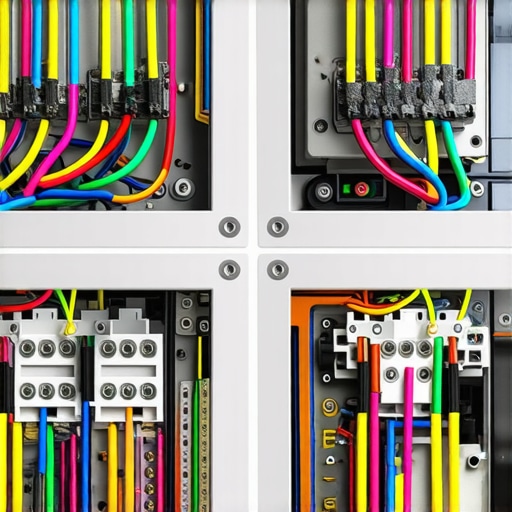
The Scent of Burnt Silicon and the Chattering Contactor
I smelled it the moment I stepped into the mechanical room of that 1978 split-level: the distinct, acrid stench of a fried circuit board. It’s the smell of money evaporating. The homeowner had just shelled out four figures for a cutting-edge multistage 2026 HVAC system, complete with AI fault detection and microgrid integration, but he’d tried to wire the smart thermostat himself using the original 45-year-old control wires. My tick tracer was screaming before I even touched the wall. People think 24-volt control systems are harmless; they’re not. When you’re dealing with the high-sensitivity logic of a 2026 beast, a single loose neutral or a nicked conductor doesn’t just trip a breaker—it lobotomizes the entire brain of your home automation setup.
My journeyman used to smack my hand if I stripped a wire with a knife. ‘You nick the copper, you create a hot spot,’ he’d scream. He was right. In these modern multistage systems, those microscopic nicks create resistance. Resistance creates heat. Heat changes the impedance of the signal. Suddenly, your $800 thermostat thinks the compressor is exploding because the voltage dropped by 0.5V across a ‘hot spot’ created by a dull pair of dikes. If you want these systems to actually work, you have to stop treating electrical wiring services like a DIY craft project and start treating them like forensic engineering.
1. The Common Wire Paradox: Capacitive Coupling in Old Romex
The first fix involves the ‘C-wire’ or Common wire. In 2026-spec HVAC units, the AI fault detection systems require a constant, clean reference to ground to monitor electrical noise. Old-timers used to ‘steal’ a ground or use a power extender kit, but those are death sentences for modern microgrid integration. The physics of capacitive coupling means that if your control wires are bundled tightly with high-voltage lines in a crowded rough-in, the C-wire picks up ‘ghost voltage.’ This phantom energy confuses the thermostat’s sensors, leading to ‘short cycling’ where the unit turns on and off rapidly, eventually welding the contacts in your main disconnect services.
“Aluminum wire connections can overheat and cause a fire without tripping the circuit breaker.” – CPSC Safety Alert 516
While most thermostat wires are copper, the lesson remains: physical integrity is everything. If your home was built mid-century, you likely have oxidation layers on your terminal blocks. I’ve seen terminals so corroded they looked like they’d been pulled from a shipwreck. The fix isn’t just swapping the wire; it’s ensuring the equipotential grid of the entire HVAC chassis is bonded correctly. Without a solid path to ground, that fancy smart thermostat is just a glorified paperweight that’s slowly cooking its own capacitors. This is why lighting installations and HVAC controls should never share a congested junction box; the induction alone will wreck your signal-to-noise ratio.
2. Solving the ‘Floating Neutral’ in Microgrid-Ready Systems
The 2026 multistage units are designed to talk to the grid, shifting loads when electricity prices spike. This requires incredibly precise voltage monitoring. I once walked into a job where the AI was throwing a ‘Phase Imbalance’ error every time the up lighting services kicked on. The culprit? A loose neutral in the sub-panel. In an older home, the thermal expansion and contraction of copper—a phenomenon called Cold Creep—loosens the screws on the neutral bar over decades. When the thermostat calls for Stage 2 cooling, the sudden current draw causes a voltage sag that the AI interprets as a grid failure. You don’t need a new thermostat; you need to torque your lugs to spec with a calibrated driver. It’s not just about making it work; it’s about preventing the arcing that starts fires behind your drywall.
3. Inductive Kickback and Surge Protector Installation
Multistage systems use Variable Speed Motors (VSMs). These motors are essentially computers that move air. When they shut down, they can throw an inductive kickback—a spike of voltage—back down the control lines. If you haven’t invested in surge protector installation specifically for your HVAC’s communication bus, you are playing Russian Roulette. I’ve used my Wiggy to test lines where a simple blower motor shut-off sent a 150V pulse into a 24V circuit. That’s enough to melt the trace right off the thermostat’s PCB. You need more than a ‘surge strip’ from a big-box store; you need a hardwired Type 1 or Type 2 protector at the disconnect to clamp those spikes before they reach the sensitive logic gates.
“All 15-amp and 20-amp, 120-volt branch circuits supplying outlets or devices installed in dwelling unit kitchens, family rooms, dining rooms, living rooms… shall be protected by a listed arc-fault circuit interrupter.” – NEC Section 210.12
4. The Equipotential Grid and Signal Integrity
The final fix is the most overlooked: the equipotential grid. Modern 2026 HVAC units often utilize bollard light installation or outdoor sensors that are tied back to the central home automation setup. If there is a voltage potential difference between the outdoor condenser’s ground and the indoor air handler’s ground, current will flow through the shielding of your data cables. This is called a ground loop. It generates heat and ruins the AI’s ability to perform fault detection. I’ve seen communication wires literally ‘bake’ inside their jackets because they were inadvertently acting as the primary ground path for a poorly bonded system. You have to ensure that every component—from the fire alarm system install to the HVAC unit—is at the same electrical potential. If I find ‘monkey shit’ (duct seal) used to hide a corroded ground rod connection instead of a proper exothermic weld or heavy-duty clamp, I know exactly why the customer’s smart home is acting possessed.
Wiring a modern HVAC isn’t about matching colors like it was in 1995. It’s about managing electromagnetic interference, ensuring perfect mechanical connections, and respecting the physics of electricity. If your installer didn’t use a torque screwdriver on the terminal strip, they didn’t finish the job. If they didn’t check for line noise with an oscilloscope or at least a high-end multimeter, they’re just guessing. Don’t let a ‘handyman special’ turn your high-tech upgrade into a fire hazard. Ensure your home automation setup is built on a foundation of solid, code-compliant electrical work. Anything less, and you’re just waiting for the smoke to tell you what went wrong.