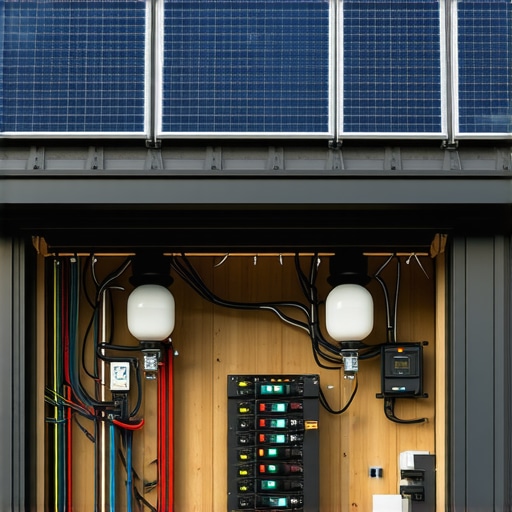
The Brutal Reality of Off-Grid Power
I have spent three and a half decades pulling 12/2 Romex through crawlspaces that would make a claustrophobic scream and troubleshooting circuits that were wired by people who thought a YouTube video was a substitute for an apprenticeship. When it comes to the tiny home movement of 2026, the stakes are not just about having enough juice to run a blender; they are about thermal dynamics, load management, and literal survival. You are packing a massive amount of potential energy into a very small, often wooden, box. If you get the physics wrong, you are not just off-grid—you are on fire. My journeyman used to smack my hand if I stripped a wire with a knife. ‘You nick the copper, you create a hot spot,’ he’d scream. He was right. That microscopic notch reduces the cross-sectional area of the conductor, increasing resistance. In a high-load off-grid system, that resistance generates heat that can eventually carbonize the surrounding insulation, leading to a breakdown that your Tick Tracer won’t see coming until the smoke starts rolling. This is the forensic reality of electrical work: electricity is a lazy, dangerous beast that always takes the path of least resistance, and it is your job to make sure that path is the one you built, not your wall studs.
Tactic 1: The 200-Amp Load Center Over-Engineering
Most tiny home builders think they can get away with a 60-amp or 100-amp subpanel. They are wrong. If you are planning for 2026 and beyond, you need to consider a 200 amp panel install even for a small footprint. Why? Because off-grid living is no longer about one lightbulb and a radio. We are talking about high-efficiency heat pumps, induction cooktops, and the inevitable integration of electric vehicles. When you perform a load center upgrade, you aren’t just adding breakers; you are increasing the physical space for heat dissipation within the enclosure. A crowded panel is a hot panel. I’ve seen bus bars warped like cheap vinyl records because a DIYer jammed twenty circuits into a ten-slot panel using tandem breakers. This creates a thermal nightmare where the breakers can’t cool down between cycles, leading to nuisance tripping or, worse, a failure to trip during an actual overcurrent event. For those integrating transport, ensuring safe and efficient EV charging station setup at home is critical because an EV charger is a continuous load that will pull 80% of its rated capacity for hours. That kind of sustained draw will find the weakest link in your system—usually a loose lug or a cheap split-bolt connector—and turn it into a slag heap.
“Arc-fault circuit-interrupter protection shall be provided as required in 210.12(A), (B), and (C).” – NEC 210.12
In a tiny home, I advocate for AI fault detection systems integrated into your main panel. These modern modules use digital signal processing to distinguish between the normal arc of a vacuum cleaner motor and the dangerous, erratic arc of a staple driven too hard into a wire during the rough-in phase. This isn’t just gadgetry; it is forensic prevention. When you are miles from the nearest fire department, your panel needs to be smarter than the person who installed it.
Tactic 2: Workshop-Grade Infrastructure in Minimalist Spaces
Tiny homes in 2026 are often hubs for digital nomads or craftsmen. This means you need a workshop electrical setup that handles more than just a laptop charger. If you are building a separate