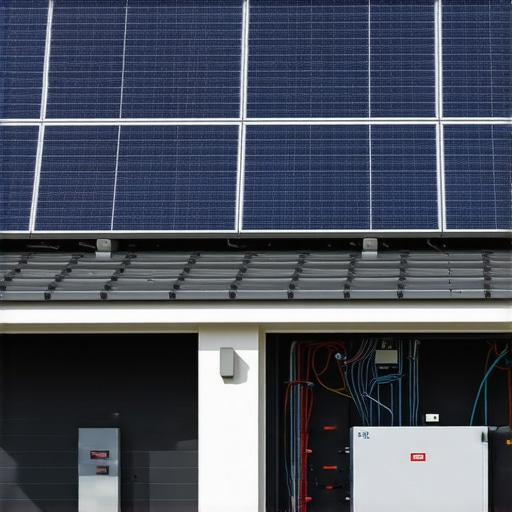
The Invisible Fire: Why Your Energy Storage Ambitions Might Melt Your Service
Most homeowners look at a sleek home battery and see a gadget. I look at it and see a massive, sustained load that will find every loose screw, oxidized wire, and cheap breaker in your house. Electricity is a lazy, murderous fluid that wants to find the shortest path to ground, and it doesn’t care if your family is sleeping upstairs when it finds a high-resistance connection. If you are planning to cut your 2026 energy bills with a storage system, you aren’t just buying a battery; you are demanding your home’s infrastructure perform at a level it was never designed for. I’ve spent 35 years pulling scorched wire out of walls, and I can tell you that the difference between a system that saves you money and one that burns down your garage is the Certified Journeyman Services you hire to install it.
The Flipper Special: A Lesson in Forensic Reality
I recently walked into a ‘fully renovated’ 1974 split-level where the owner had just DIY-installed a lithium-ion backup. He called me because he smelled ‘hot plastic’ every time the battery discharged. I opened the main panel and found a nightmare. The previous flipper had buried a junction box behind the drywall, using cheap wire nuts to extend the home run. I found it with my thermal camera—the junction was hitting 240 degrees Fahrenheit. The insulation was so brittle it crumbled like a dry cracker when I touched it. They were 20 minutes away from a structural fire because someone wanted to save $200 on a proper subpanel installation. This is why you don’t trust ‘handymen’ with high-amperage storage systems.
“Energy storage systems shall be installed in accordance with the manufacturer’s instructions and the provisions of this article.” – NEC Article 706.10
1. The Foundation: The 100 Amp Service Upgrade
You cannot build a skyscraper on a swamp, and you cannot run a modern 2026 energy storage system on an aging 100-amp service. If your panel still uses those old-style bus bars or, heaven forbid, it’s a Federal Pacific or Zinsco, you are sitting on a time bomb. A 100 amp service upgrade is the mandatory first step. When a battery kicks in to offset peak rates, it draws or pushes significant current. In mid-century homes, we often see Cold Creep—the physical phenomenon where aluminum conductors expand and contract at different rates than the steel lugs holding them. This loosening creates a gap, the gap creates an arc, and the arc creates a fire. Upgrading to a 200-amp copper bus bar system ensures your home can handle the ‘heavy lifting’ of energy arbitrage without the bus bar pitting or the breakers jamming.
2. Component Zooming: The Physics of Thermal Expansion
Let’s talk about the lugs. When we perform certified journeyman services, we aren’t just ‘tightening screws.’ We are using calibrated torque wrenches to meet specific inch-pound requirements. Why? Because of the thermal cycle. Every time your energy storage system cycles, the wires heat up. In 1960s-1980s homes, the interaction between different metals can cause oxidation layers. If you don’t use the right de-oxidizing paste (what we call Monkey Shit in the field, though that’s usually the duct seal—we use specialized grease for connections), you’re asking for a high-resistance hot spot. Before you even think about 2026 savings, ensure your electrician is checking for ‘nicked’ copper. My old journeyman used to say a nicked wire is a fuse that hasn’t blown yet.
3. The Subpanel Strategy and Load Shedding
Don’t try to back up your whole house on a single battery unless you have the budget of a small nation. The smart play is a dedicated subpanel installation. This isolates your ‘critical loads’—refrigeration, medical devices, and basic lighting—from the ‘luxury loads’ like the HVAC or the EV charger. If you’re also looking into ensuring safe and efficient EV charging station setup at home, you need to understand how these two systems talk to each other. Without a subpanel, your battery might try to dump its entire capacity into your car during a power outage, leaving you in the dark. We use a Wiggy to test these circuits and ensure there are no ‘bootleg grounds’ where a lazy tech tied the neutral to the ground wire inside the walls.
“The installation of ESS shall be performed by qualified persons.” – NFPA 70E Standard for Electrical Safety
4. Exterior Hardening: Docks and Perimeter Power
If you live near the water, your energy storage system faces a different beast: Salt Air Corrosion. I’ve seen meter cans rot from the inside out in three years. For those utilizing dock electrical services or bollard light installation along a coastline, the galvanic reaction between salt and electricity is relentless. Your storage system needs stainless steel enclosures and dielectric grease on every single contact point. Even your fence line lighting should be on a separate GFCI-protected circuit to prevent a fault in the yard from tripping your expensive battery system. If you see green crust on your breakers, that’s not just ‘old age’—that’s a path for a short circuit.
5. The Final Audit: Beyond the Battery
Cutting your 2026 bills isn’t just about storage; it’s about efficiency. If you are still running 30-year-old motors in your ceiling fan installation, you are wasting the energy you’re trying to save. Modernize your parking lot lighting or home exterior with LED bollard light installation to reduce the baseline draw. When we do same day service appointments, we often find that a customer’s ‘battery issue’ is actually a phantom load from an old, improperly wired Christmas light services transformer that was never removed. Always use a Tick Tracer to verify that a line is truly dead before you start poking around. Electricity doesn’t give second chances.
If you’re ready to stop playing with fire and start saving money, contact us today to get a real professional on-site. We don’t do ‘handyman specials.’ We do code-compliant, forensic-grade electrical work that lets you sleep at night.