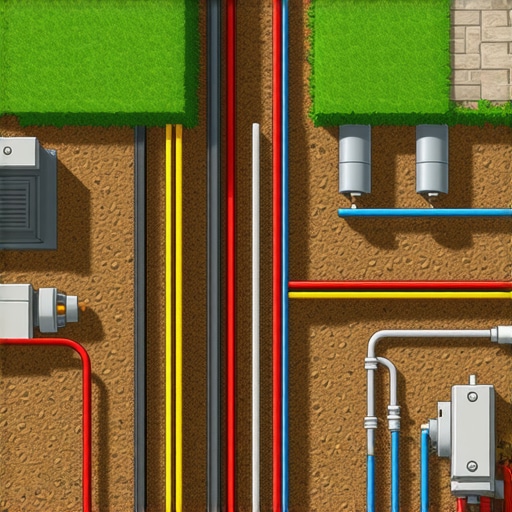
The Sensory Warning: When the Soil Smells Like a Short Circuit
You’re standing on your manicured lawn, the sun is setting, and you catch it—the sharp, metallic tang of ozone or that unmistakable stench of fishy, burning plastic wafting from a landscape outlet. It isn’t the mulch. It’s the sound of five hundred volts trying to find a shortcut through damp earth because someone thought direct-burial cable was a ‘suggestion’ rather than a life-safety requirement. As a licensed master electrician, I’ve spent decades digging up the sins of the past. I’ve seen what happens when a weekend warrior buries Romex six inches deep in a flower bed; the copper turns to green dust, the insulation sloughs off like dead skin, and suddenly your backyard is a literal minefield.
The Forensic Breakdown: Why Your Yard Power Is a Time Bomb
I walked into a ‘fully renovated’ property last summer where the homeowner wanted a bollard light installation. The flipper had promised ‘state-of-the-art’ outdoor power. My tick tracer was screaming before I even hit the patio. I started digging and found three live junction boxes buried four inches under the sod, wrapped in nothing but electrical tape and hope. They hadn’t even used monkey shit (duct seal) to keep the moisture out of the connectors. The wire was already pitting from electrolysis, a process where the current literally eats the metal in the presence of soil minerals. This isn’t just a nuisance trip; it’s a setup for a structure fire or a lethal shock to anyone walking barefoot on wet grass.
“Underground wiring that is not installed at the proper depth or protected by the correct conduit can lead to insulation failure and fire hazards.” – CPSC Safety Alert 516
1. Rigid Conduit Systems and the Physics of Cold Creep
The first line of defense for 2026 yard power isn’t the wire itself; it’s the raceway. For a true lifetime workmanship guarantee, we don’t just throw UF cable in a trench. We use Schedule 80 PVC or Rigid Metal Conduit (RMC). Why? Because of hydrostatic pressure and cold creep. In older homes built between 1900 and 1950, we often see knob and tube remnants or ungrounded systems that someone tried to extend outdoors. When you bury a wire, the weight of the earth and the shift of the frost line squeeze the insulation. Over years, the copper actually migrates through the plastic, leading to a ‘hot’ earth. A certified journeyman service ensures your home run back to the panel is encased in a shell that can withstand a shovel strike or a shifting tectonic plate.
2. Solar Panel Electrical Hookup & Energy Storage Integration
Modern yards are no longer just for grass; they are micro-utilities. Integrating a solar panel electrical hookup with energy storage systems requires more than just a few wires. You’re dealing with high-voltage DC runs that need to be isolated from your smart home wiring. We zoom in on the thermal expansion of the conductors. DC current generates heat differently than AC. If your licensed master electrician doesn’t account for the expansion loops in the rough-in phase, the wire will literally pull itself out of the terminals inside your inverter cabinet. We use specialized transition boxes to move from underground feeders to the attic fan installation points or the main service entrance, ensuring the house doesn’t become a giant resistor.
3. Bollard Light Installation: Beyond the Aesthetic
When we talk about bollard light installation, we aren’t just talking about pretty sticks in the mud. We are talking about impedance grounding. Every light post is a potential lightning rod. If the certified journeyman services don’t properly bond the metal casing of that light to the grounding electrode system, a surge from a nearby strike will fry your entire smart home wiring network. We use dikes to precision-strip the THWN-2 wire—never a knife, which nicks the copper and creates a ‘hot spot’ where resistance builds. For those looking for more interior-focused guidance, you can see how we handle [lighting installations made easy](https://reliableelectricpro.com/lighting-installations-made-easy-a-step-by-step-electrician-guide) to understand the complexity we bring to the exterior.
4. Smart Home Wiring: Shielding Against EMI
In 2026, your yard is saturated with data. Automated irrigation, security cameras, and outdoor mesh nodes require data lines. If these are run in the same trench as your 120V power without proper electromagnetic interference (EMI) shielding, your ‘smart’ home becomes very stupid, very fast. We employ lockout tagout training protocols during the install to ensure no circuits are energized while we are fine-tuning these sensitive low-voltage pathways. A licensed master electrician knows that physical separation in the trench is governed by the NEC to prevent induction—where the power line ‘leaks’ signal into the data line.
“All 15- and 20-ampere, 125-volt receptacles located in outdoors shall have ground-fault circuit-interrupter protection for personnel.” – National Electrical Code (NEC) Section 210.8
5. Service Upgrades and Load Calculations
You can’t just keep adding pendant light hanging fixtures to your patio or a new attic fan installation without checking the math. This is where Ohm’s Law becomes a harsh mistress. Most 1950s homes have a 100-amp service that is already wheezing. Adding a car charger or a massive outdoor kitchen requires a ‘heavy-up.’ We perform a forensic load calculation to ensure your bus bars aren’t glowing cherry red at 2:00 AM. If you’re experiencing issues with your high-draw outdoor appliances, it might be time to [troubleshoot your EV setup](https://reliableelectricpro.com/ev-charger-troubleshooting-expert-tips-to-fix-common-issues) or the dedicated circuits feeding them. We don’t do ‘handyman fixes’ here. We use a Wiggy (solenoid voltmeter) to verify true voltage under load, not just a ghost reading from a cheap digital meter.
The Fix: Why Code-Compliance Is Your Only Safety Net
Electricity isn’t a hobby, and the soil is a relentless conductor of mistakes. When we finish a trim-out, we aren’t just looking for the lights to turn on. We are verifying the ground fault path. If a fault occurs 50 feet out by the pool, the breaker needs to trip in milliseconds, not simmer until the grass catches fire. This is why we insist on certified journeyman services and provide a lifetime workmanship guarantee. If you are worried about your current setup, [contact us](https://reliableelectricpro.com/contact-us) before the next rainstorm turns a minor leak into a major disaster. Sleep at night knowing every lug is torqued to spec and every trench is deep enough to keep the world safe from your wires.“,”image”:{“imagePrompt”:”A professional licensed master electrician in a high-visibility vest using a trenching tool to install grey Schedule 80 PVC conduit in a deep trench in a residential backyard. Close-up on the conduit connections and the warning tape being placed above it. 4k resolution, realistic trade photography.”,”imageTitle”:”Professional Underground Conduit Installation”,”imageAlt”:”A licensed electrician installing underground conduit for yard power safety.”},”categoryId”:0,”postTime”:””}