The Scent of a Failing Circuit
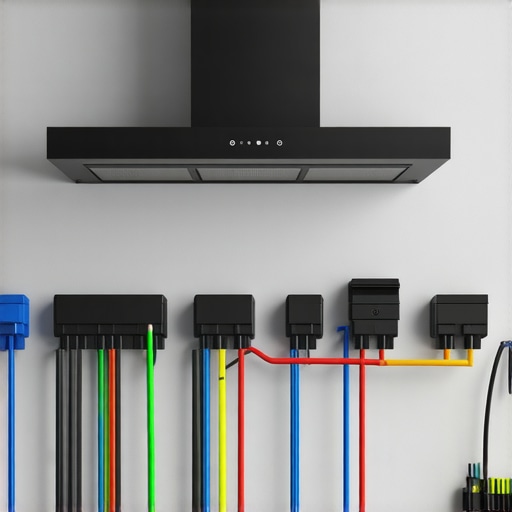
I walked into a kitchen last month where the owner was bragging about his brand-new 1200 CFM professional range hood. It looked beautiful—all brushed stainless steel and high-end switches. But the air didn’t smell like dinner; it smelled like fish and ozone. I pulled my Tick Tracer out of my pocket, and the damn thing started screaming before I even touched the cabinetry. This is what we call a ‘Flipper Special.’ The previous contractor had buried a live junction box behind the marble backsplash, likely thinking a piece of tape was enough to secure a loose wire nut. I found it with my tracer, and when I cut into that expensive stone, the plastic box was melted into a black puddle. That is the reality of kitchen range hood wiring mistakes: they don’t just fail; they wait until you’re asleep to start a fire.
The Autopsy of a Kitchen Disaster
When we talk about a 2026 renovation, we aren’t just talking about picking out tile. We are talking about the sheer electrical load of modern life. Your kitchen is no longer just a place to boil water; it is a hub for smart thermostat wiring, lighting install projects, and increasingly, a node for AI fault detection systems. If you botch the range hood, you aren’t just losing a fan; you’re compromising the entire structured wiring panels integrity of your home. Most homeowners treat the range hood as an afterthought, a simple two-wire hookup. It’s not. It’s a high-vibration motor assembly that pulls significant amperage and requires surgical precision during the rough-in phase.
“Receptacles installed in kitchens to serve countertop surfaces shall be supplied by not fewer than two small-appliance branch circuits.” — NEC 210.52(B)(1)
Error 1: The ‘Suicide Tap’ on Small Appliance Circuits
The most common sin I see is the ‘Suicide Tap.’ A DIYer or a lazy handyman sees a 20-amp small appliance circuit nearby and decides to pigtail the range hood into it. This is a direct violation of the National Electrical Code. Those circuits are reserved for high-draw countertop appliances like blenders and air fryers. When you add a heavy-duty range hood motor to that mix, you create a nuisance tripping nightmare. In older homes from the 70s, this is even more dangerous. If you have aluminum wiring, that extra load triggers Cold Creep. Aluminum expands at a different rate than the brass screws on a receptacle. Over time, the wire literally ‘creeps’ out from under the screw. This creates a high-resistance gap. Resistance creates heat. Heat creates fire. You need a dedicated home run for any high-powered ventilation system, period.
Error 2: The Buried Open Splice
Electricity is lazy. It wants to find the shortest path to the ground, and it will go through your cabinet screws to do it if you don’t give it a proper path. I’ve lost count of how many times I’ve done a trim-out and found Romex cable just hanging out of a wall without a junction box, connected with nothing but electrical tape. This is a ‘widow maker’ setup. Vibration from the fan motor eventually shakes those wire nuts loose. Without a metal or plastic box to contain the arcing, those sparks hit the wood framing or the grease-laden dust inside the cabinet. If you are doing a lighting install or a kitchen reno, every splice must be accessible. No exceptions. This is why arc flash studies are becoming standard in high-end residential work—to understand exactly how much energy is released when these bad connections finally let go.
Error 3: Ignoring the Neutral-Ground Bond
In mid-century homes, we often find ‘bootleg grounds.’ This is where a ‘handyman’ connects the neutral wire to the grounding screw because the house doesn’t have a true equipment grounding conductor. In a range hood, this is lethal. The metal chassis of the hood becomes part of the electrical path. If that neutral wire ever breaks upstream, the entire hood becomes ‘hot.’ You touch the hood while touching a grounded stove, and you become the filament in a lightbulb. This is why we insist on a full panel evaluation. If your panel is an old Federal Pacific or Zinsco, those breakers won’t trip even when the chassis is glowing. You might need a camper electrical panel for your RV out back, but for your house, you need a modern 200-amp service that can handle a level 2 EV charger and a 3-stage kitchen reno without breaking a sweat.
“Aluminum wire connections can overheat and cause a fire without tripping the circuit breaker.” — CPSC Safety Alert 516
Error 4: Poor Wire Stripping and Nicks
My old journeyman used to say that if you nick the copper with your dikes or a knife, you’ve just built a heater. When you score a wire, you reduce its circular mil area. You’ve turned a 12-gauge wire into a 14-gauge wire at that specific point. That ‘neck’ becomes a hot spot. In a high-vibration environment like a range hood, that nick becomes a fracture point. Eventually, the wire breaks, arcs, and you have a localized fire inside the wall. We use calibrated strippers and always check our work with a Wiggy or a high-quality multimeter to ensure the voltage drop across the circuit is within spec. This is even more critical when integrating smart thermostat wiring or AI fault detection sensors that rely on clean, stable voltage signals.
Error 5: The Lack of Proper Stress Relief
The range hood isn’t a static object; it vibrates. If the Romex isn’t clamped properly where it enters the hood’s chassis, the sharp metal edges of the knockout will eventually saw through the plastic insulation. It’s a slow process—it might take three years—but eventually, it hits the black wire. If your home isn’t protected by AFCI (Arc-Fault Circuit Interrupter) breakers, that arcing will continue until something catches fire. When we perform hot tub wiring services or RV hookup installation, we use liquid-tight conduit and heavy-duty strain relief. Why should your kitchen be any different? You’re cooking with gas and fire; you don’t need an electrical fire joining the party.
The Future-Proof Reno: 2026 and Beyond
If you’re planning a renovation, you need to think about the infrastructure that supports it. Don’t just pull a wire; think about how that wire interacts with your structured wiring panels. We are seeing a move toward AI fault detection that can ‘listen’ to the sine wave of your electricity and tell you if a motor in your range hood is starting to fail or if a wire nut is loosening. But all the AI in the world won’t save you if the rough-in was done by someone who doesn’t know a home run from a base hit. Ensuring a safe and efficient setup for all high-draw appliances is the only way to sleep at night. Whether it’s lighting installations or a complex ventilation system, the physics don’t change. Heat, resistance, and vibration are the enemies. If you don’t respect the amperage, the amperage will find a way to make you respect it. If you’re feeling overwhelmed, check out these troubleshooting tips or contact a professional who carries a torque wrench and a healthy dose of paranoia. Your home is a machine; keep it torqued to spec.