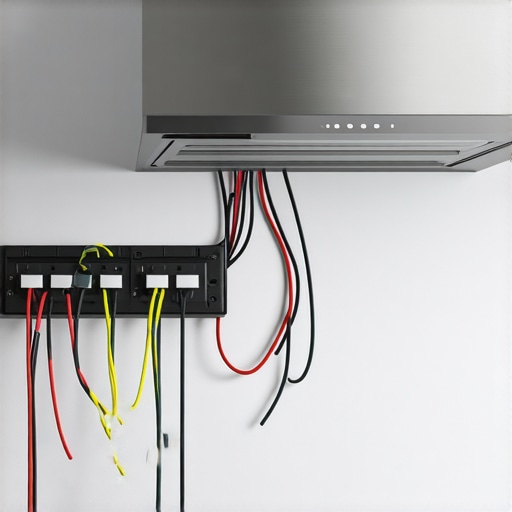
The Autopsy of a Kitchen Fire: Why Your 2026 Reno is a Death Trap
I can usually smell a bad kitchen renovation before I even pull my truck into the driveway. It is a sickly-sweet scent, like ozone mixed with scorched cabinet lacquer and a hint of charred insulation. By the time the homeowner calls me, they are usually complaining that their high-end, 1200-CFM designer range hood is ‘acting twitchy’ or that the LED lights in the crown molding flicker every time they sear a steak. They want a quick fix. I give them a forensic reality check. In thirty-five years of pulling 12-gauge Romex through grease-slicked walls, I’ve learned that the kitchen is the most dangerous room in the house, and the range hood is the most neglected piece of life-safety equipment in it.
My journeyman used to smack my hand with a pair of dikes if I even looked like I was going to strip a wire with a utility knife. ‘You nick that copper, kid, and you’ve just built a fuse that’s going to pop in ten years,’ he’d scream. He wasn’t being a jerk; he understood the physics of Current Crowding. When you create a notch in a conductor, the electron flow is forced into a smaller cross-section. This increases resistance, which creates heat. In a 2026 renovation, where we are packing home automation setup sensors and microgrid integration controllers into tight soffits, that heat has nowhere to go. It builds until the insulation reaches its glass transition temperature, turns into a liquid, and then—boom—you have a sustained arc that your 15-amp breaker might not even notice until the drywall is melting.
1. The Fatal ‘Bootleg’ Ground and Bonding Jumper Failure
The most common error I see in mid-century homes being prepped for modern 2026 standards is the absence of true bonding jumper services. Homeowners see a metal box and assume it’s safe. But if you are working with an older ungrounded system and you decide to ‘bootleg’ a ground—connecting the neutral screw to the green ground screw on the hood—you are playing a lethal game. Under normal conditions, it works. But the moment you lose that neutral connection upstream, the entire stainless steel chassis of your range hood becomes live. You reach for the fan switch with a wet hand while leaning against a grounded sink, and you become the path of least resistance.
“Aluminum wire connections can overheat and cause a fire without tripping the circuit breaker.” – CPSC Safety Alert 516
Failure to properly bond the equipment is a violation of NEC code updates that specify exactly how metallic components must be tied back to the service entrance. If you aren’t sure, put down the screwdriver and contact a professional electrician before you cook yourself instead of the bacon.
2. The Cold Creep of Aluminum Feeders
If your home was built between 1965 and 1975, your kitchen renovation is likely fighting the demon of aluminum wiring. Aluminum isn’t inherently evil, but it is temperamental. It suffers from Cold Creep. Every time you turn on that heavy range fan, the wire heats up and expands. When you turn it off, it contracts. Because aluminum expands at a different rate than the brass screws on your rough-in junction box, the connection slowly vibrates itself loose over years. This creates an air gap. Electricity hates a vacuum, so it jumps the gap—creating a micro-arc. I’ve used my Tick Tracer on hoods where the voltage was ghosting through the entire cabinet run because the aluminum feeder had literally pulled itself out of the terminal. If you are doing a 2026 reno, you need AlumiConn connectors or a total copper rewire. Don’t let a ‘handyman’ tell you a twist-on wire nut is enough.
3. Electromagnetic Interference with Ethernet and Automation
In the modern home automation setup, we are running Cat6 ethernet wiring services right alongside power lines to feed smart displays and kitchen sensors. This is a massive mistake. When you run a high-draw motor—like a range hood fan—parallel to data lines without proper shielding, you induce EMF noise. This results in ‘ghost’ signals in your smart home hub. I’ve seen sauna heater installation projects and high-end kitchens where the ‘smart’ fridge would reboot every time the oven hood hit ‘Turbo’ mode. You must maintain at least 12 inches of separation or use shielded conduit. If you’re seeing glitches, check how electricians tackle troubleshooting to isolate these interference patterns.
4. Overloading the Home Run: The 100-Amp Myth
Everyone wants a 2026 kitchen with steam ovens, induction ranges, and 1200-CFM hoods, but they are trying to run it all on a 1970s 100-amp service. A range hood is often treated as an afterthought, tacked onto the lighting circuit. When that fan kicks on, it pulls an Inrush Current that can momentarily dip the voltage for the entire kitchen. This is why whole house surge protection is no longer optional; it is a necessity to protect the sensitive logic boards in your new appliances from these internal surges.
“The surge protective device (SPD) shall be an integral part of the equipment or installed immediately adjacent to it.” – NFPA 70 (NEC)
If you’re adding heavy loads like tiny home wiring or an ADU to your property, you must perform a total load calculation. Your electrician isn’t trying to ‘upsell’ you on a panel heavy-up; they are trying to keep your bus bars from melting into a puddle of slag.
5. The Junction Box ‘Burial’ and Improper Trim-out
Flippers love to bury junction boxes behind backsplashes. I’ve spent hours with a Wiggy and a wall scanner trying to find the widow maker—a live, hidden wire nut that’s vibrating loose inside a sealed wall. For a 2026 reno, all connections must be accessible. Period. During the trim-out phase, ensure your range hood is hard-wired into a dedicated box that isn’t crammed with Monkey Shit (duct seal) just to stop a draft. Proper airflow isn’t just for the smoke; it’s for the heat dissipation of the conductors. If you’re struggling with the final hookups, look at lighting installations made easy for tips on managing wire congestion in tight shrouds. Also, don’t forget that many local jurisdictions now offer senior discount services for safety inspections—use them. Protecting your home from an electrical fire is a lot cheaper than a 2026 rebuild.