
The Invisible Burn: Why Your 120V Outlet Is a Fire Risk
You probably think that plugging your shiny new electric vehicle into a standard wall outlet is fine because the car came with a cord. That’s like trying to drain a swimming pool with a cocktail straw while the sun is evaporating the water. I have spent 35 years smelling the distinct, metallic tang of ozone and the sickly-sweet scent of melting PVC insulation. Most people don’t realize that a standard 15-amp or 20-amp outlet switch repair is a temporary fix for a system that was never designed for a continuous, high-draw load. When you charge at Level 1, you are pushing that circuit to its absolute thermal limit for 12, 18, or 24 hours straight.
My old journeyman used to smack my hand if I stripped a wire with a knife. ‘You nick the copper, you create a hot spot,’ he’d scream. He was right. A tiny nick in the conductor reduces the cross-sectional area, increasing resistance at that specific point. Resistance generates heat. Heat causes expansion. When the wire cools, it contracts. In mid-century homes built between 1960 and 1980, this cycle is deadly because of aluminum wiring and the phenomenon known as ‘Cold Creep.’ Aluminum expands and contracts at a much higher rate than copper, literally backing screws out of terminals until the connection is loose enough to arc. If you are trying to charge an EV on a mid-century circuit, you aren’t just charging a car; you are stress-testing a potential bomb.
“Aluminum wire connections can overheat and cause a fire without tripping the circuit breaker.” – CPSC Safety Alert 516
The Load Calculation: Why 100 Amps Isn’t Enough
Modern life has outpaced the infrastructure of the average 1970s suburban home. Back then, the biggest load was a clothes dryer or a window AC unit. Today, you have commercial electrical services-grade appliances in residential kitchens, server racks for home offices, and now, the massive demand of an EV. When I walk into a garage for an electrical inspection, I’m looking at the service mast and the panel bus bars. If you have a Federal Pacific or Zinsco panel, you are already living on borrowed time. Those breakers are notorious for ‘jamming’—they stay in the ‘on’ position even when the internal components have melted together.
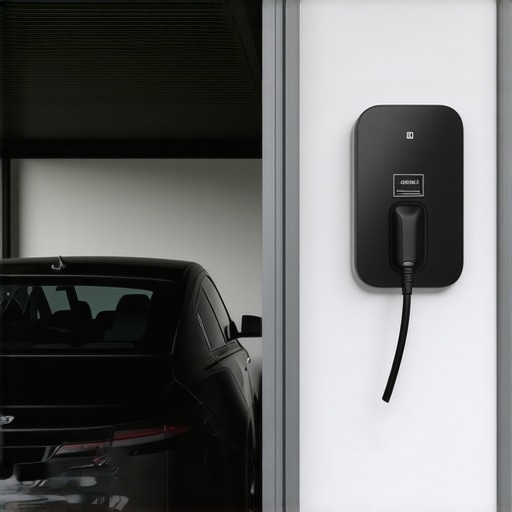
Installing a Level 2 station requires a dedicated home run. We aren’t just tapping into the nearest junction box. We are running 6/3 Romex or THHN in conduit directly from the main panel. This is a 240V circuit, usually pulling 40 to 50 amps. According to the National Electrical Code (NEC), an EV charger is considered a continuous load.
“Overcurrent protection for feeders and branch circuits supplying electric vehicle supply equipment shall be sized for continuous duty and shall have a rating of not less than 125 percent of the maximum load of the electric vehicle supply equipment.” – NEC Article 625.41
This means if your charger pulls 40 amps, you need a 50-amp breaker and wire rated for that heat. Using infrared thermography scans, I’ve seen terminals on DIY installs hitting 200 degrees Fahrenheit because some ‘handyman’ used a 40-amp breaker for a 40-amp load, ignoring the 125% rule. That heat eventually migrates into the bus bar, ruining the entire panel. If you’re experiencing issues, check out these ev charger troubleshooting expert tips to see if your system is already failing under the pressure.
The Anatomy of a Professional Level 2 Installation
When we do a rough-in for a Level 2 station, we aren’t just pulling wire. We are looking at the swimming pool bonding nearby to ensure there’s no stray voltage, and we’re checking the grounding electrode system. If your ground rod is a rusted piece of rebar from 1965, your EV charger’s sensitive electronics will fry during the first summer thunderstorm. We often have to perform a ‘heavy-up’ or a service upgrade, replacing that old 100-amp main with a 200-amp or 300-amp service.
We use ‘Monkey Shit’ (duct seal) to ensure no moisture enters the service mast from the outside. We use a Wiggy or a high-end multimeter to verify voltage drop across the run. If the voltage drops more than 3% under load, your charger will ‘throttle’ itself, and you’re paying for electricity that’s just turning into wasted heat in your walls. This is why ensuring safe and efficient ev charging station setup at home requires a licensed pro who understands the physics of resistance, not just someone who can turn a screwdriver.
Beyond the Charger: The Smart Garage Ecosystem
A modern garage is no longer just a place to park a leaky oil-dripper. It’s a tech hub. While I’m in the walls, I’m usually pulling Cat6 for ethernet wiring services because these chargers need a solid Wi-Fi or hardline connection for firmware updates. I’ve seen restaurant kitchen electrical setups that were less complex than a modern ‘smart garage.’ We also look at lighting installations because you can’t see a frayed charging cable in the dark. If you’re wondering how we handle the complexities of these setups, read about how electricians tackle troubleshooting for lighting installations in high-demand environments.
For those in coastal areas, the enemy is salt. Salt air is conductive. It bridges the gap between phases in your meter can, causing catastrophic failure. We use dielectric grease on every connection and specify stainless steel enclosures for anything exterior. This isn’t about an ‘upsell’; it’s about preventing a holiday emergency call when your power goes out on Christmas Eve because your meter can rotted through. We even offer a military discount wiring program because the men and women serving deserve a home that doesn’t burn down while they’re deployed.
Forensic Diagnostics and Remote Monitoring
One of the most powerful tools in my bag isn’t my dikes or my tick tracer; it’s the remote electrical diagnostics we can now perform. Many Level 2 stations log errors. When a customer calls saying their car didn’t charge, I can often see the ‘ground fault’ or ‘under-voltage’ error code before I even leave the shop. This allows us to pinpoint if the issue is the car, the station, or the house’s infrastructure. Regular maintenance is key, so don’t ignore these top ev charger maintenance tips for optimal performance.
If you see flickering lights when the car starts charging, that is a ‘widow maker’ sign. It means you likely have a loose neutral. A loose neutral in a multi-wire branch circuit can send 240V through your 120V outlets, frying every television, refrigerator, and laptop in the house. This is why an electrical inspection is mandatory when adding a high-amperage load. Don’t let a ‘handyman’ tell you it’s a simple plug-and-play job. Electricity is a patient predator; it will wait for the perfect moment of maximum load to find the weakest link in your system. If you suspect your panel is over-taxed, you need to contact us immediately before the ‘fishy smell’ of burning plastic becomes a 911 call.