
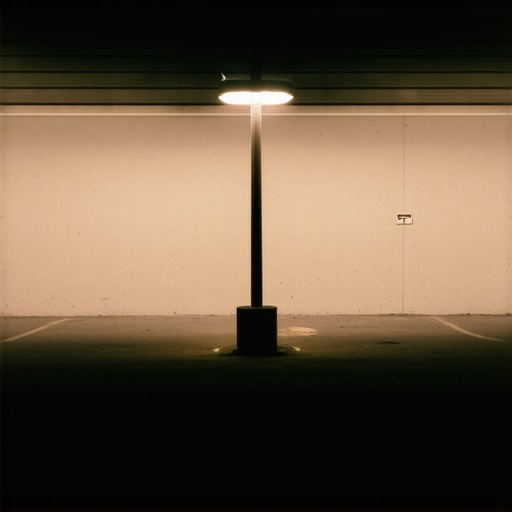
The Forensic Breakdown of a Dark Lot
I walked into a ‘fully renovated’ commercial retail center last November where the property manager was bragging about his low utility bills. I didn’t care about his spreadsheet; I cared about the faint scent of ozone wafting from the exterior subpanel. I pulled out my Wiggy and a thermal imager, and sure enough, the flipper who did the ‘upgrade’ had buried live junction boxes behind the new decorative masonry on the site poles. He’d used interior-rated wire nuts in a wet location and stuffed the conduit ends with literal rags instead of proper Monkey Shit (duct seal). The moisture had turned those boxes into small, buzzing heaters. This wasn’t just a lighting failure; it was a fire waiting for a breezy night. Parking lot lighting isn’t about aesthetics; it’s about the cold, hard physics of liability and electrical integrity. If your lot stays on 24/7 or, worse, stays dark because of a tripped breaker you can’t find, you’re playing Russian roulette with your insurance policy.
The Physics of Constant Load and Thermal Fatigue
Most parking lot systems from the 1970s and 80s were designed for High-Pressure Sodium or Metal Halide lamps. These are ‘always-on’ beasts. When you run a circuit at 80% capacity for 12 hours a night, you encounter a phenomenon called thermal expansion. The copper or aluminum conductors heat up, expand, and then contract when the sun comes up. Over a decade, this cycle loosens the terminal screws on your breakers. A loose connection creates resistance. Resistance creates heat. Eventually, you get a Home Run that’s charred black at the bus bar. This is why infrared thermography scans are non-negotiable for commercial properties. We catch the heat signatures of failing lugs before they turn into a fire damage wiring restoration project. By switching to motion-sensing lighting, you aren’t just saving pennies on the kilowatt-hour; you are reducing the duty cycle of the entire infrastructure. You’re letting the copper breathe.
“Aluminum wire connections can overheat and cause a fire without tripping the circuit breaker.” – CPSC Safety Alert 516
The Component Zoom: How Motion Sensors Actually Work
We need to talk about the difference between a cheap big-box sensor and an industrial-grade Passive Infrared (PIR) or microwave sensor used in a professional pathway lighting install. A PIR sensor works by detecting a change in the infrared radiation hitting its Fresnel lens. When a car—a massive heat source—rolls into the frame, the sensor triggers a relay. In older systems, these relays were mechanical and would eventually weld themselves shut. Modern sensors use solid-state switching which is much more reliable but sensitive to voltage spikes. If your property hasn’t had proper arc flash studies or lacks a grounding electrode install that actually meets the 25-ohm-or-less requirement, a single lightning strike nearby will fry the brains of every sensor in the lot. This is why I always check the ground rod first. If that rod is five feet deep in dry sand, your fancy motion sensors are just expensive bird perches.
The Liability of Darkness and the ‘Handyman Special’
I’ve seen ‘electricians’ try to save money by daisy-chaining recessed lighting installation techniques into outdoor environments. They use Romex where they should use THWN-2 in conduit. They skip the Rough-in inspection and go straight to the Trim-out. When I perform a forensic inspection after a slip-and-fall or a security incident, the first thing I look for is ‘creative’ wiring. Motion sensors provide a psychological deterrent. When a light snaps on, it signals that the property is being monitored. If your sensors are flickering or delayed, it’s often a sign of ‘Cold Creep’ in the aluminum conductors or a failing neutral. If you’re seeing ghost-tripping, you likely have a neutral-to-ground bond where it shouldn’t be—a ‘bootleg ground’ that makes your Tick Tracer go haywire. Proper troubleshooting for lighting installations requires more than just a ladder; it requires an understanding of how the circuit behaves under load.
Integrating Modern Systems: From Saunas to Storage
We are moving toward a world where parking lots are more than just asphalt; they are hubs for energy storage systems and EV charging. If you’re looking into ev charging station setup, you have to realize the massive draw these units place on your panel. You can’t just slap a 50-amp breaker into a 1980s Zinsco panel and hope for the best. The same logic applies to sauna heater installation or hot tub wiring services at multi-family complexes. These high-draw appliances require dedicated circuits and, often, a ‘heavy-up’ of the entire service. If your parking lot lights are on the same aged transformer as your new EV chargers, the voltage drop when those chargers kick in will kill your motion sensors’ electronics. I’ve seen it happen. The lights start strobing like a disco because the control circuit is starving for steady voltage.
“The grounding electrode conductor shall be copper, aluminum, or copper-clad aluminum.” – NEC Article 250.66
The Forensic Audit: Why Your Breakers Aren’t Tripping
One of the most dangerous things I find is a breaker that has ‘frozen.’ In Mid-Century panels like Federal Pacific, the internal pivots can seize. You could have a dead short in a parking lot pole—maybe a gardener hit it with a mower—and the breaker will just sit there, closed, while the wire insulation melts inside the conduit. This is where arc flash studies become vital for commercial owners. We calculate the potential energy that could be released during a fault. If your lighting system isn’t maintained, that fault could be catastrophic. I always carry Dikes and a Wiggy to test for phantom voltage. If I see 50 volts on a dead circuit, I know I’ve got an induced voltage or a leaking insulator somewhere in the run. If you’ve recently had a fire alarm system install, ensure your lighting is integrated so that the lot goes to 100% brightness during an alarm. That’s not just a good idea; in many jurisdictions, it’s the law.
Protecting Your Investment with Infrared Scans
Don’t wait for a fire damage wiring restoration team to tell you that your parking lot lighting was a disaster. Get an infrared thermography scan now. We look at the contactors, the timers, and the motion sensor junctions. We look for ‘hot spots’ that indicate high resistance. A high-resistance connection is a heat generator. In a parking lot, that heat can melt the ‘Monkey Shit’ right out of the conduit and let water in, leading to a Widow Maker scenario where the pole itself becomes energized. If you’re worried about performance, check out these ev charger maintenance tips which apply surprisingly well to all high-demand outdoor electrical gear. Regular maintenance isn’t a luxury; it’s the only way to ensure your lot doesn’t become a forensic crime scene. Torque your lugs, check your grounds, and for heaven’s sake, stop hiring the guy who uses a pocket knife to strip his wires. Copper nicks cause hot spots. Hot spots cause fires. Period. Sleep better at night knowing your lot is torqued to spec and your sensors are watching the perimeter.