The Invisible Threat Lurking in Your Mid-Century Walls
If you live in a home built between 1965 and 1978, you aren’t just sitting on a piece of history; you are likely sitting on a pressurized thermal bomb. I’ve spent over three decades in the trade, carrying a Wiggy that’s vibrated more times than I can count due to phase-to-ground faults that should have never happened. We are moving into 2026, a time where our electrical demands are skyrocketing with speaker system setup requirements, high-draw appliances, and the constant pull of technology, yet many homeowners are still relying on a branch circuit material that was a mistake from the day it left the refinery: solid-conductor aluminum. This isn’t about scaring you into a service call; it’s about the physics of failure. Aluminum wiring fails because it is fundamentally incompatible with the devices meant for copper. When you combine this with a Widow Maker—the industry nickname for Federal Pacific or Zinsco panels that refuse to trip—you have the recipe for a structure fire that insurance won’t cover.
The Journeyman’s Lesson: Why the Nick Matters
My journeyman back in the late 80s was a brute who didn’t believe in ‘soft skills.’ I remember rough-in day on a big remodel; I was using a pocket knife to strip the jacket off some 12/2 Romex. He saw me, walked over, and smacked my hand so hard I dropped my dikes. ‘You nick the copper, you create a hot spot,’ he’d scream. He wasn’t just being a jerk. He was teaching me about cross-sectional area and resistance. With copper, a nick is a problem; with aluminum, a nick is a death sentence for that circuit. Aluminum is brittle. The moment you compromise that outer skin, the Cold Creep begins. This is where the metal physically moves away from pressure points under thermal load. Every time you turn on your architectural lighting or your pool pump electrical system, those wires heat up, expand, and then contract. Over time, they literally crawl out from under the terminal screws, creating a gap that invites an arc. And that arc? It’s hotter than the surface of the sun.
“Aluminum wire connections can overheat and cause a fire without tripping the circuit breaker.” – CPSC Safety Alert 516
1. The Telltale Smell of Melting Phenolic Resin
The first sign your 2026 home is at risk isn’t something you see, but something you smell. When aluminum connections begin to fail, they don’t always produce a ‘smoke’ smell. Instead, you’ll catch a whiff of something fishy or a sharp, chemical tang. That is the smell of the plastic device body or the wire insulation reaching its melting point. By the time you smell it, the power quality analysis would already show massive harmonic distortion and voltage drops. If you walk past a switch and it smells like an old wet dog or burnt fish, don’t wait. Use a Tick Tracer to see if there’s phantom voltage jumping through the carbonized path of the plastic. This is often seen when people attempt a DIY phone line installation or try to mess with fiber optic cabling near old high-voltage runs without knowing what they are touching.
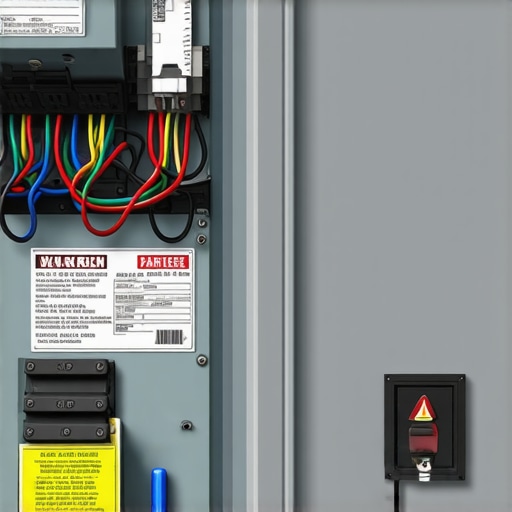
[IMAGE_PLACEHOLDER_1]
2. Flickering Lights and Voltage Sag
Do your lights dim when the refrigerator kicks on? In a copper-wired home, that might just be a heavy startup load. In an aluminum-wired home, that’s a sign that your Home Run to the panel is failing. Aluminum has a much higher coefficient of thermal expansion than copper. When the load hits, the wire heats up and the resistance increases. This is particularly dangerous for modern electronics. If you are doing a speaker system setup, you might hear a hum or a pop through the woofers. This isn’t a bad cable; it’s a sign that the electrical integrity of the circuit is compromised. We often find that the underground wiring services feeding the house or a detached garage have oxidized so badly that the neutral is ‘floating,’ which can send 240 volts through your 120-volt outlets, frying everything you own.
3. The ‘Hot’ Switch Plate
Go around your house and put the back of your hand against your switch plates. They should be at room temperature. If they feel warm to the touch, you have an active fire hazard. Aluminum forms an oxide layer almost instantly when exposed to air. This aluminum oxide is a semiconductor; it actually resists current flow. As the Cold Creep loosens the screw, the oxide layer builds up on the contact point. Now, the current has to fight through that resistance, generating heat. This is why we insist on using lockout tagout training protocols even for simple trim-out work in these homes. You never know when a wire is going to snap off and hit the metal box because it’s been brittle for forty years. If you find heat, it’s time for a professional lighting installations made easy upgrade using AlumiConn connectors or CO/ALR rated devices. Check out our guide on lighting installations for more on safe device replacement.
4. Discolored Outlets and Faceplates
Forensic inspection often reveals ‘ghosting’ or soot patterns on the wall around an outlet. This is caused by micro-arcing. If you see any browning around the plug slots, that circuit is compromised. We see this frequently with pool pump electrical connections where the constant vibration of the motor accelerates the loosening of the aluminum terminals. When we go in for a knob and tube removal or an aluminum remediation, we use Monkey Shit (duct seal) to prevent moisture from entering conduits, but that doesn’t fix the terminal issue. The only real fix is a mechanical pressure sleeve like the Copalum crimp or the AlumiConn lug, which provides a gas-tight seal to prevent oxidation from ever starting. This is especially critical if you are ensuring safe and efficient EV charging station setup at home, as the sustained 40-50 amp load of a car charger will melt an aluminum connection in minutes.
5. Mysterious Circuit Failures
If an entire room goes dark but the breaker hasn’t tripped, you are in the danger zone. This usually means a wire has burnt through at a junction box, likely a Home Run buried in the attic. This is common in homes where previous owners didn’t follow lockout tagout training and tried to ‘pigtail’ copper to aluminum using standard wire nuts. You cannot do that. The two metals have a galvanic reaction, and they expand at different rates. The wire nut will eventually pop off or melt. For our veterans and active duty members, we offer a military discount wiring program to help remediate these ‘flipper specials’ and get the home back to 2026 safety standards. If you’re experiencing these issues, it may be time to contact us for a comprehensive thermal scan. We don’t just look at the surface; we analyze the power quality to ensure your infrastructure can handle the modern age.
“Aluminum wiring is 55 times more likely to reach ‘fire hazard conditions’ than copper.” – Consumer Product Safety Commission
The 2026 Solution: Remediation vs. Replacement
Don’t let a ‘handyman’ tell you that a little purple wire nut will fix your aluminum problems. Those are a temporary fix at best and a fire hazard at worst. You need a Master Electrician who understands the chemistry of the metals. Whether it’s fiber optic cabling or underground wiring services, the integrity of the connection is the only thing standing between you and a disaster. We specialize in identifying these risks before the Widow Maker in your garage fails to trip. Sleeping at night is much easier when you know your connections are torqued to spec and your architectural lighting isn’t slowly cooking the rafters. Check your panels, check your plates, and respect the electricity—it certainly won’t respect you if you ignore the signs.