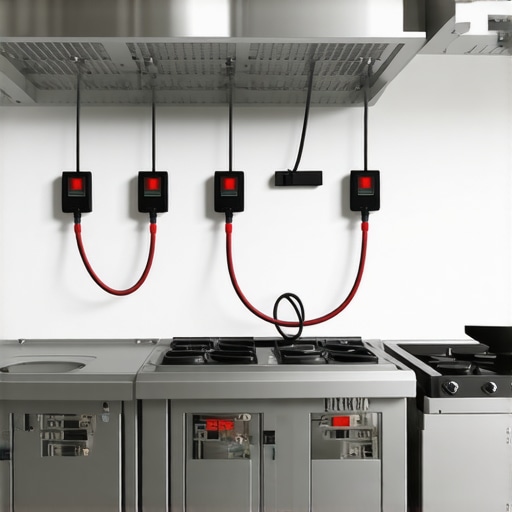
The Autopsy of a Smoldering Commercial Kitchen
I can usually smell a failing restaurant before I even see the ‘Grand Opening’ sign. It is a specific, acrid perfume—part rancid grease, part ionizing ozone. In my thirty-five years as a forensic inspector, I have seen too many owners prioritize marble countertops over the industrial motor controls that actually keep the place from turning into a pyre. By 2026, the load on commercial grids is only increasing. If you are running a line without a regular circuit breaker replacement schedule, you are not just flirting with downtime; you are inviting the fire marshal to a permanent closing ceremony.
The Flipper’s Hidden Sin: A Forensic Narrative
I walked into a ‘fully renovated’ bistro last month where the previous owner had performed what I call the ‘Cosmetic Cover-up.’ They had installed beautiful subway tile, but my tick tracer was screaming like a banshee near the dish pit. When I pulled the stainless steel backsplash away, I found three buried junction boxes with open-air splices, likely performed by a handyman who thought Romex belonged in a commercial wet zone. The wire nuts had literally fused into a single glob of slag because the circuit was pulling double its rated amperage for the new high-temp dishwasher. That is the reality of many ‘turnkey’ kitchens—lethal shortcuts hidden behind aesthetic choices.
“All 125-volt, single-phase, 15- and 20-ampere receptacles installed in kitchens shall have ground-fault circuit-interrupter (GFCI) protection for personnel.” — National Electrical Code (NEC) Article 210.8(B)
1. Industrial Motor Controls and the Physics of Arcing
Your walk-in coolers and vent hoods rely on industrial motor controls that are the heart of the operation. Inside these controllers, contactors snap shut thousands of times a year. Over time, the silver-cadmium oxide coating on these contacts wears thin. This leads to pitting and ‘chatter.’ When a contactor chatters, it creates a micro-arcing event that generates heat exceeding 3,000 degrees Fahrenheit. This isn’t just about a motor burning out; it’s about the heat traveling back up the home run and softening the insulation on your conductors. If you haven’t had a pro check the torque on these lugs lately, you’re dealing with the ‘Widow Maker’ of kitchen equipment. A professional inspection can catch these hot spots before they bridge the phase gap.
2. The High-Heat Failure of GFCI Outlet Installation
In a kitchen, GFCI outlet installation is not a one-and-done deal. The internal electronics of a GFCI are sensitive to the humidity and extreme temperature fluctuations common in commercial cooking environments. We see ‘nuisance tripping’ constantly, but often, it is a sign that the internal sensing transformer is failing due to moisture ingress. By 2026, we expect even stricter monitoring of these safety devices. If your line cooks are taping over a breaker or using a ‘cheater plug’ to bypass a trip, they are bypassing their own survival. If your outlets are showing signs of discoloration or ‘cold creep’—where the wire literally moves out of the terminal due to thermal expansion—you need an immediate outlet switch repair.
3. The Surge Protector Installation Requirement for 2026
Modern kitchens are becoming smarter, which ironically makes them more fragile. You have touch-screen POS systems, smart ovens, and advanced lighting controls. A single utility spike can fry thousands of dollars in electronics. This is why surge protector installation is no longer an optional luxury. We are seeing a massive increase in ‘transient voltage’ issues. A surge doesn’t just come from lightning; it comes from that massive 10HP exhaust fan motor kicking on and off. This constant hammering of the voltage curve wears down the silicon components in your gear. Protect the brain of your kitchen or prepare to pay for it during the dinner rush.
“The employer shall ensure that each employee who is exposed to the hazards of flames or electric arcs does not wear clothing that could increase the extent of injury to such exposure.” — NFPA 70E Standard for Electrical Safety
4. Lighting Upgrades and the LED Driver Trap
Many restaurants are moving toward office lighting upgrades and sign lighting installation to modernize their look. However, the move to LED involves drivers that generate significant harmonic distortion on the neutral wire. In older buildings, the neutral wire was often downsized. When you load that neutral with high-frequency harmonics from cheap LED drivers, the wire starts to cook from the inside out. I’ve used my dikes to snip through neutral wires that were so brittle they snapped like dry twigs. Ensure your lighting installations are handled by someone who understands load balancing and harmonic mitigation, not just someone who can hang a fixture.
5. The Bathroom Exhaust Fan and Secondary Hazards
It seems minor, but the bathroom exhaust fan is a common source of commercial fires. These units are often left running 24/7, pulling in grease-laden air from the kitchen area. The dust and grease build up in the motor housing until it reaches a flashpoint. Combined with the need for EV charger installation in the parking lot to meet 2026 demand, your total service load is likely redlined. We recommend a comprehensive service evaluation to ensure your main lugs aren’t glowing while you’re busy worrying about the menu. Our lifetime workmanship guarantee ensures that when we torque a bolt or pull a wire, it stays put for the long haul. Don’t let a ‘handyman’ with a Wiggy and a roll of electrical tape dictate the safety of your investment.
Conclusion: Torque Matters
Electricity is a lazy, dangerous beast that always wants to find the shortest path to the ground. In the high-stakes environment of a restaurant, that path shouldn’t be through your employees or your building’s frame. From the monkey shit used to seal the conduit entries to the final trim-out of the dining room, every connection must be precise. Sleep better knowing your system was built to last, not just to pass a cursory glance. Visit our privacy policy for more information on how we handle your data during service requests.