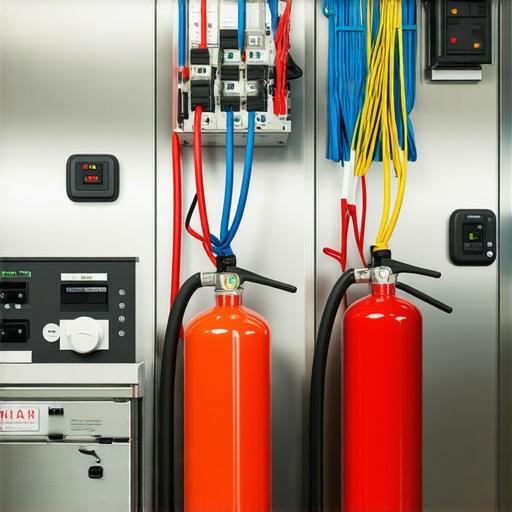
The Scent of a Short: A Forensic Look at Commercial Kitchen Safety
I’ve spent the better part of four decades following the scent of burning PVC and ozone through some of the grimiest crawlspaces in the industry. Most restaurant owners think a fire starts with a grease flare-up on the range. They’re wrong. It starts in the wall, three inches behind that shiny NSF-rated prep table, where a loose neutral is vibrating at 60Hz until the insulation turns into a blackened, brittle husk. By the time you see the smoke, the physics of Joule Heating has already decided your insurance premium is going up.
I walked into a ‘fully renovated’ bistro last month—a classic flipper special. The owner was proud of the new tile, but my Tick Tracer started screaming before I even touched the stainless steel backsplash. I pulled a cover plate and found three live junction boxes buried behind the masonry, wires twisted together without nuts and wrapped in cheap electrical tape that was melting into a sticky mess. That flipper had literally entombed a fire. This isn’t just poor craftsmanship; it’s a Widow Maker setup waiting for the lunch rush to pull enough amperage to bridge the gap.
“Aluminum wire connections can overheat and cause a fire without tripping the circuit breaker.” – CPSC Safety Alert 516
1. The Load Calculation: More Than Just Breaker Counting
In 2026, the demand on a kitchen’s electrical spine is unprecedented. We aren’t just talking about a toaster and a fridge anymore; we are talking about high-output induction ranges and sophisticated energy storage systems designed to offset peak-hour costs. When you add equipment without a proper load calc, you’re inviting Cold Creep. This happens when the conductor expands and contracts under heavy load, eventually backing the screw out of the lug. A loose connection creates high resistance, and resistance creates heat—enough to liquefy a bus bar. If your breakers are warm to the touch, you don’t need a bigger fuse; you need an electrical panel upgrade before the internal components fuse together in a permanent ‘on’ position.
2. The Invisible Threat of Carbon Tracking
Commercial kitchens are humid, greasy, and brutal. Over time, a fine mist of vaporized oil and moisture settles into your outlets. This creates a conductive path over the surface of the plastic—a phenomenon known as carbon tracking. Once that path is established, electricity begins to ‘leak’ across the insulation. It’s a slow, silent arc that won’t always trip a standard breaker. This is why electrical wiring services for restaurants must prioritize the use of weather-resistant GFCIs and specialized enclosures. If you’re seeing ‘ghost’ flickering in your lighting installations, don’t just swap the bulb. You likely have a tracking issue in a Rough-in box that’s ready to ignite.
3. Bonding: Not Just for Swimming Pools
Most people associate swimming pool bonding with safety, but the same physics apply to a commercial kitchen. Every piece of stainless steel—from the sinks to the prep tables—needs to be at the same electrical potential. If a line-voltage wire inside a specialized appliance frays and touches the chassis, and your bonding is compromised, the entire line of tables becomes a live conductor. I’ve seen chefs get ‘the bite’ just by reaching for a whisk while leaning on a cooler. We use a Wiggy to check for these stray voltages. If your Home Run back to the panel isn’t properly grounded, you’re running a high-voltage lottery every time you start a shift.
“Failure to provide a permanent, low-impedance path to ground can result in lethal voltages on metal enclosures during a fault condition.” – NFPA 70E
4. Motor Vibration and Connection Fatigue
Your rooftop exhaust fans and walk-in compressors are the workhorses of the operation. They also vibrate constantly. This vibration is the enemy of every mechanical connection. We utilize vibration analysis services to ensure that the harmonic frequency of the equipment isn’t literally unscrewing the wire nuts in the disconnect box. A loose wire in a workshop electrical setup or a commercial kitchen leads to arcing, which carbonizes the air and creates a plasma bridge. This is why we use ‘Monkey Shit’ (duct seal) to prevent moisture from traveling down the conduit and causing corrosion on the terminals. If you haven’t had a Trim-out inspection on your heavy motors in two years, you’re overdue for a holiday emergency call you can’t afford.
5. The Low-Voltage Trap: Network and Control Cables
Modern kitchens rely on network cable installation for POS systems and smart appliances. The mistake I see most often is running these low-voltage lines parallel to high-voltage Romex or THHN feeders. The electromagnetic interference can cause data corruption, sure, but the real danger is when a surge jumps from the 240V line to the Cat6. These thin wires aren’t designed to carry that kind of current; they turn into heating elements instantly. Whether you are dealing with garage wiring services or a 5-star kitchen, keeping your ‘power’ and ‘data’ separated by the required 2-inch gap is a non-negotiable safety standard. If you’re experiencing system crashes, it might not be a software glitch—it might be induced voltage from a failing circuit.
The Forensic Conclusion
Electricity doesn’t bargain, and it doesn’t have a sense of humor. It follows the path of least resistance every single time. Whether you need a lighting installation guide or a full industrial overhaul, the goal is the same: stay code-compliant so you don’t end up on my forensic report. From whole house fan wiring logic to complex kitchen grids, the torque on a screw matters as much as the layout of the floor. Don’t let a ‘handyman’ with a pair of Dikes and a roll of tape touch your livelihood. Get it torqued, get it tested, and get it right. Contact an expert before the smell of ozone becomes the smell of smoke.