The Cost of a Nicked Wire: A Lesson in Forensic Electrical
My old journeyman, a man who smelled like stale coffee and electrical ozone, used to wait until I was midway through a rough-in before he’d strike. I was eighteen, hacking at a piece of Romex with a pocketknife, when he slapped the back of my head so hard my teeth rattled. ‘You nick the copper, you create a hot spot,’ he’d scream over the hum of a generator. ‘That tiny scratch is a bottleneck for electrons. It creates resistance. Resistance creates heat. Heat creates a fire that kills people while they sleep. Use your dikes or your strippers, or get off my job site.’ He was right. Thirty-five years later, I still see those ‘hot spots’ through thermal imagers, glowing like embers inside walls because someone was too lazy to use the right tool. This isn’t just about making lights turn on; it’s about the physics of survival in a workshop environment.
The Three-Phase Power Advantage for 2026
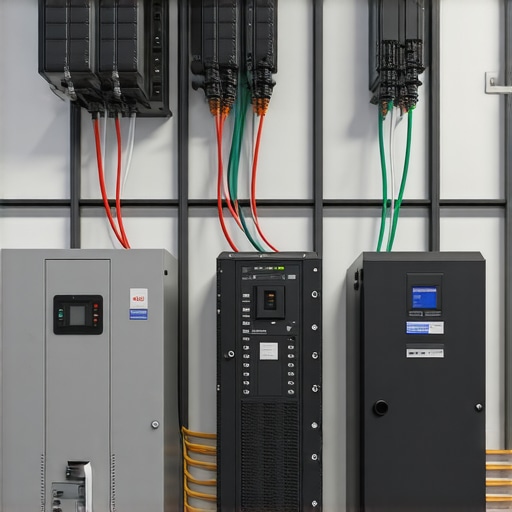
If you are planning a workshop electrical setup for 2026, you aren’t just looking at a few extra outlets. You are looking at the transition from hobbyist to industrial-grade reliability. Three-phase power is the ‘win’ that changes everything. In a standard single-phase setup, the power delivery pulsates. In a three-phase system, you have three separate alternating currents, each offset by 120 degrees. This means the power delivery never drops to zero. For your heavy machinery—CNC mills, massive lathes, or industrial compressors—this results in smoother torque, less vibration, and significantly higher efficiency.
“Electrical equipment shall be installed in a neat and workmanlike manner.” – NEC Article 110.12
When we talk about a 200 amp panel install for a shop, we have to calculate the total coincident load. If you’re running a dust collector, a welder, and a climate control system simultaneously, a standard residential panel will choke. We look at the ‘Home Run’—the main feeders coming from the utility. If those wires are undersized, you get voltage drop. Your motors run hot, their internal insulation degrades, and eventually, they burn out. This is where preventative electrical maintenance saves you thousands. I’ve walked into shops where the ‘Wiggy’ (my trusted solenoid voltmeter) showed a 15-volt drop the moment the compressor kicked in. That is a recipe for equipment failure.
The Hidden Dangers: Cloth Insulation and Aluminum Gremlins
Many shops are converted garages or old barns, and that brings the nightmare of cloth insulated wiring replacement into play. This old stuff is a forensic inspector’s gold mine. Over decades, the rubberized cloth becomes brittle. The moment you touch it to add a smart home wiring module or a new light, the insulation crumbles away like a dry leaf, leaving bare copper exposed inside your conduit. This is how you get a ‘Widow Maker’—a stray voltage on a metal casing that’s just waiting for you to complete the circuit to ground.
Then there’s the mid-century headache: aluminum wiring repair. Aluminum isn’t inherently evil, but it’s temperamental. It suffers from ‘Cold Creep.’ When current flows, the wire heats up and expands. Because aluminum expands at a different rate than the brass screws on your outlets, it slowly pushes itself out from under the terminal. When it cools, it doesn’t crawl back. Over hundreds of cycles, the connection becomes loose. A loose connection is a high-resistance connection. I’ve seen aluminum terminals that looked like they’d been hit with a blowtorch, all because a screw wasn’t torqued to spec. We use AlumiConn connectors or COPALUM crimps to fix this, ensuring the transition to copper is gas-tight and permanent. For those tackling these issues, understanding lighting installations made easy often starts with ensuring the underlying wire can actually handle the load.
Grounding, Bonding, and the Physics of Safety
A proper grounding electrode install is the difference between a tripped breaker and a catastrophic failure. I’ve seen shops where the owner thought ‘grounding’ was just driving a piece of rebar into the dirt. Total amateur hour. A real ground needs to hit the water table or use a chemical rod if the soil resistivity is too high. We aren’t just grounding for shorts; we are grounding for lightning and surge protection.
“Aluminum wire connections can overheat and cause a fire without tripping the circuit breaker.” – CPSC Safety Alert 516
And don’t get me started on swimming pool bonding if your shop is near a backyard oasis. This isn’t just about grounding; it’s about equipotential bonding. We are connecting all metal parts together so there is no voltage difference between them. If your shop’s electrical system isn’t bonded correctly to the pool’s grid, you can end up with ‘stray voltage’ that gives you a tingle—or a lethal shock—when you touch a metal workbench while standing on a damp concrete floor. It’s all about path of least resistance, and trust me, you don’t want to be that path.
Modern Infrastructure: Data Closets and Airflow
The 2026 shop is a smart shop. This requires data closet organization that would make a server admin weep with joy. Use dikes to keep your zip ties flush; nobody likes a ‘stinger’ left behind that slices your forearm open when you’re reaching for a patch cable. We separate the high-voltage lines from the low-voltage data lines to prevent EMI (Electromagnetic Interference) from dirtying your signals. If your CNC starts throwing ghost errors, it’s probably because your data line is zip-tied to a 240V motor lead.
Finally, we address the environment. A bathroom exhaust fan in a shop isn’t for smells; it’s for moisture and chemical vapor control. If you’re finishing wood or cleaning parts, you need a fan that’s rated for continuous duty. We often integrate these into a preventative electrical maintenance schedule, checking the bearings for ‘drag’ that can lead to motor fires. For those integrating newer tech, like vehicle support, following top ev charger maintenance tips ensures your infrastructure isn’t just powerful, but smart. If you run into issues, ev charger troubleshooting becomes much easier when your data closet isn’t a rat’s nest of ‘Monkey Shit’ (duct seal) and tangled cat6.
The Final Torque
Electricity is a lazy, dangerous beast. It wants to go home to the transformer, and it will take the easiest way to get there. Whether we are performing a safe and efficient ev charging station setup or a heavy-up for a three-phase motor, the rules of physics don’t change. You torque your lugs to the inch-pound rating stamped on the breaker. You use a ‘Tick Tracer’ to double-check your work, but you trust your Wiggy for the truth. You don’t cut corners, because in the forensic world, the truth always comes out in the ashes. If you have questions about your specific setup, you can contact us for a real evaluation. Don’t let your shop be the subject of my next forensic autopsy.